Mark 4:35-41
The sun had already begun its slow descent toward the western hills of Galilee. The crowds were finally thinning. It had been a long day.
Since early morning, Jesus had been on His feet, teaching the mysteries of the Kingdom. Between the lessons came the endless stream of human need. There were demon-possessed men. There were the desperate with every imaginable disease and affliction. Mothers and fathers brought hopeless cases of their children. Men once tormented by suffering walked away with new life.
His compassion was astonishing.
The attention He gave to every face, every story, every need—as though it were the only one in the world—never ceased to amaze them. The disciples could hardly drag their feet after Him. They watched Him pour Himself out again and again. Every healing. Every encounter. Every spiritual battle with the powers of darkness seemed to take something from Him.
God does not grow weary.
But Christ could.
He was truly Human.
"Let us go over to the other side," Peter heard the tired but determined voice of His Master say, glancing toward the boat.
Even then the crowds continued pressing around Him, asking questions, seeking one last touch, one last answer. Slowly He stepped into the boat. Strong hands pushed it away from shore.
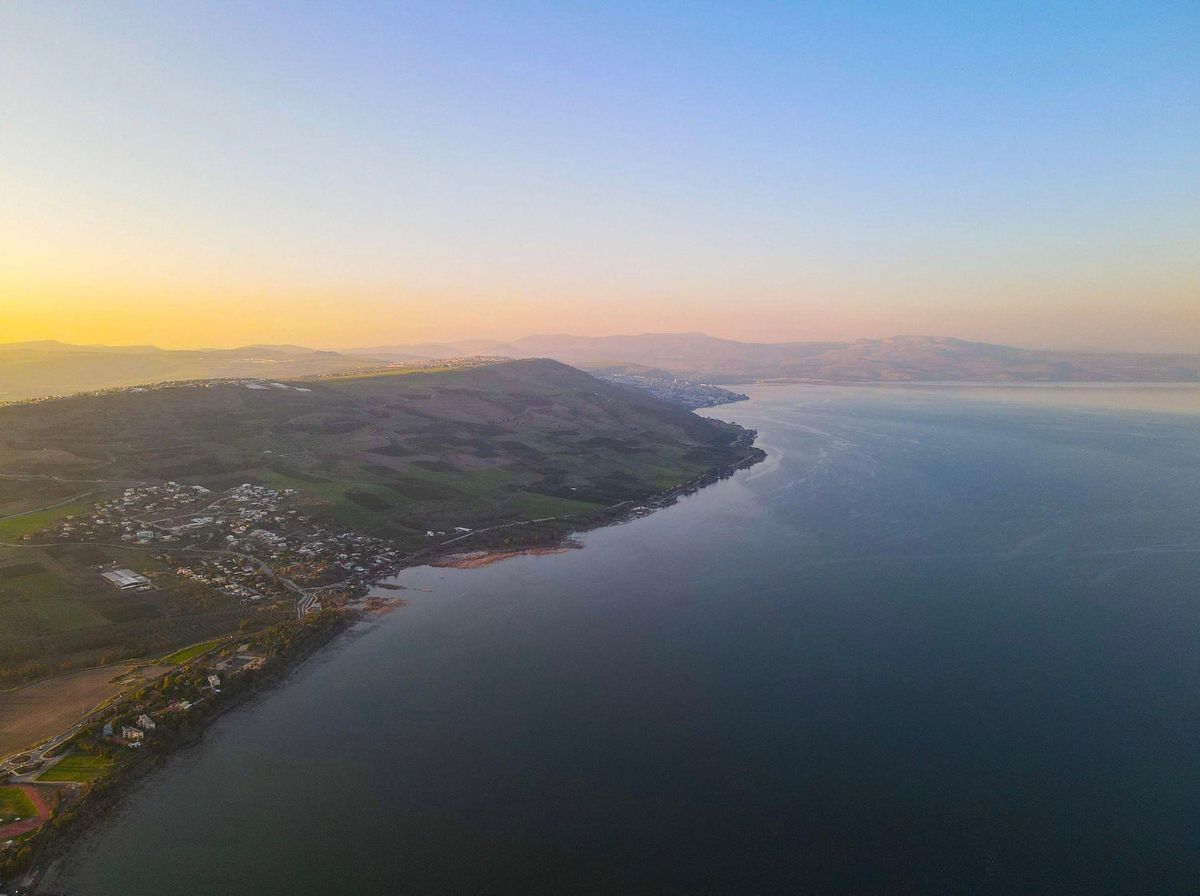
The vessel drifted away from the hometown shoreline of Capernaum and headed toward the darkening eastern coast. Across the lake lay the rugged country of the pagan Gerasenes.
Experienced eyes of fishermen were watching the horizon.
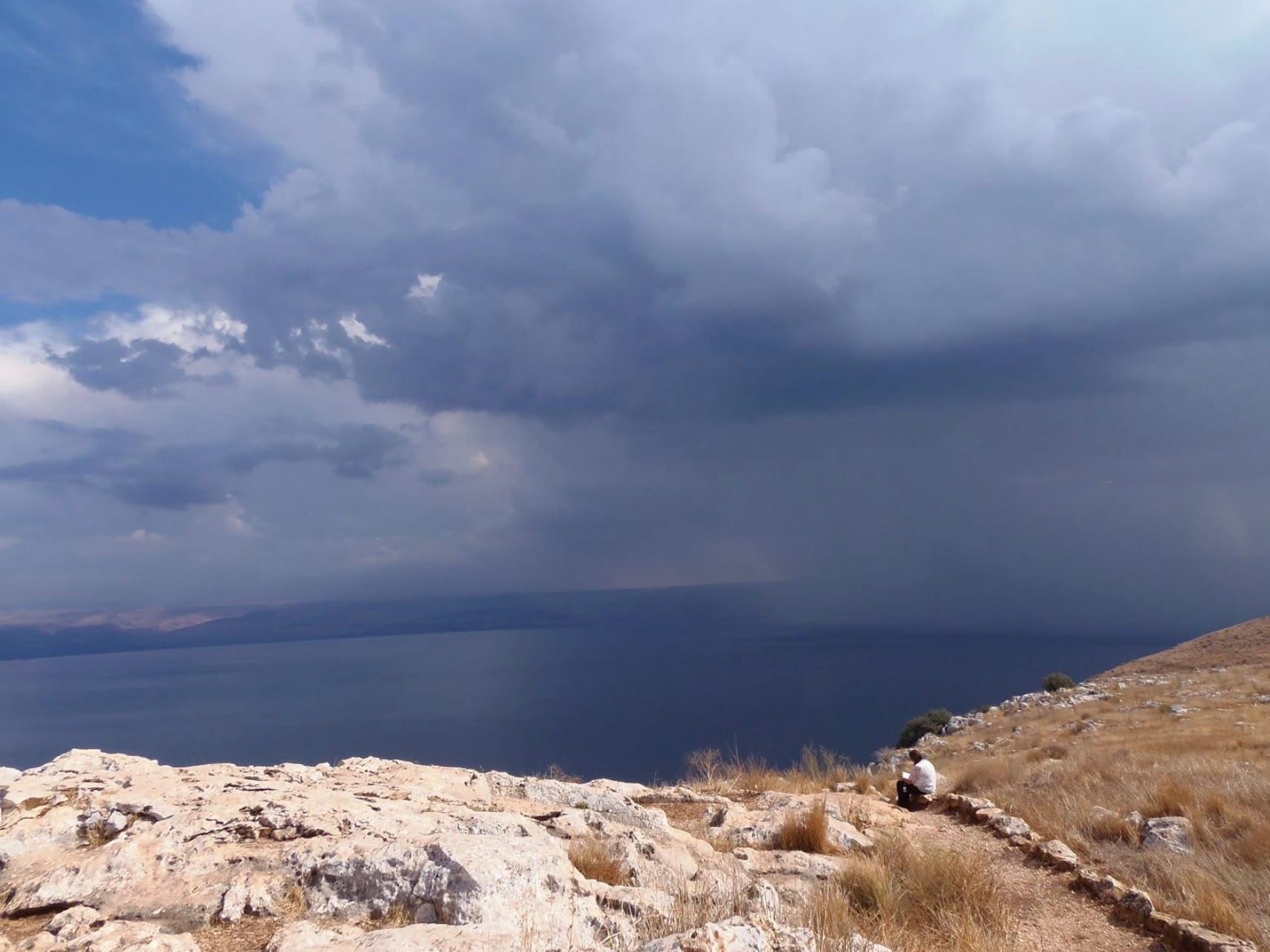
Dark clouds gathered over the surrounding heights. The wind shifted. The tranquil waters of Galilee began to stir.
Not good signs.
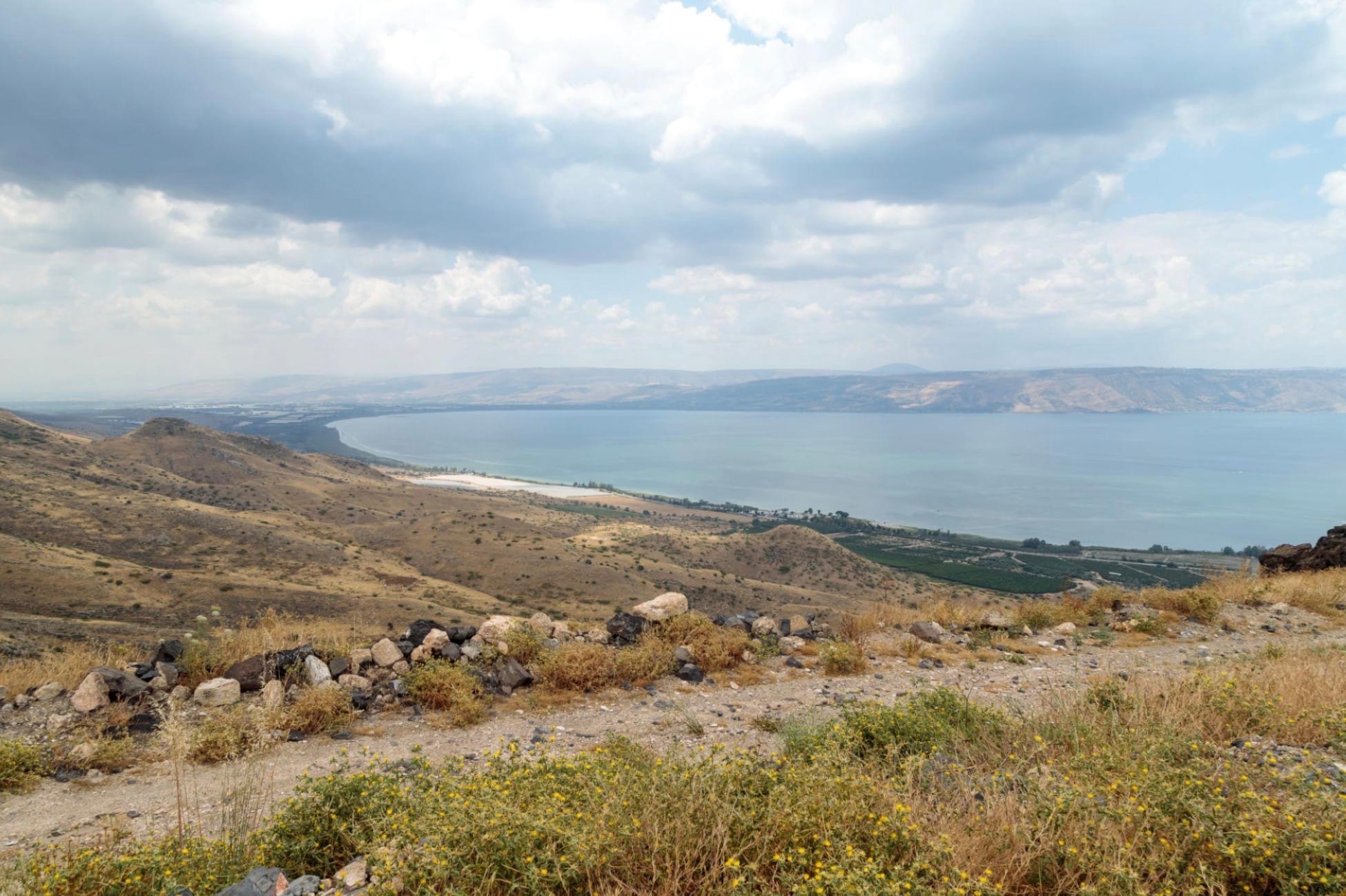
The Sea of Galilee lies nearly 210 meters below sea level, nestled in a basin surrounded by hills. To the west rise the hills of Lower Galilee. To the northeast stand the heights leading toward Mount Hermon, whose snow-capped summit towers far above the region. Deep ravines cut through the surrounding landscape. When cool air rushes down these valleys and collides with the warm air hovering above the lake's heated surface, violent storms can form with astonishing speed.
Even today fishermen on the lake speak of sudden squalls appearing almost without warning.
Mark, likely preserving Peter's eyewitness recollections, describes what followed as a λαῖλαψ μεγάλη (lailaps megalē)—a great whirlwind, a furious storm.
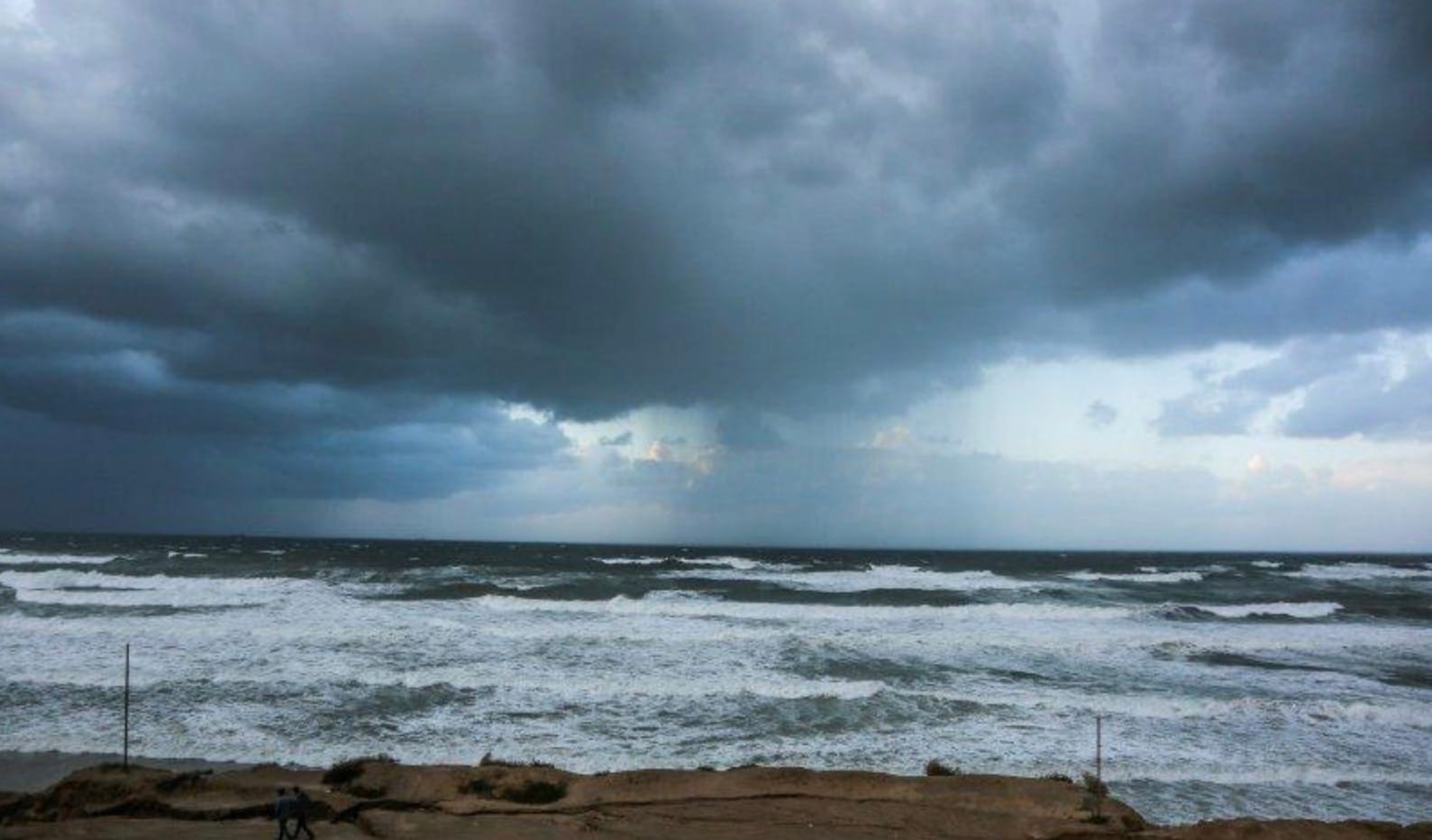
Within moments the small waves became towering walls of water.
I have never experienced sea sickness nor a sea storm, only what I can imagine from the masterpieces of Aivazovsky.
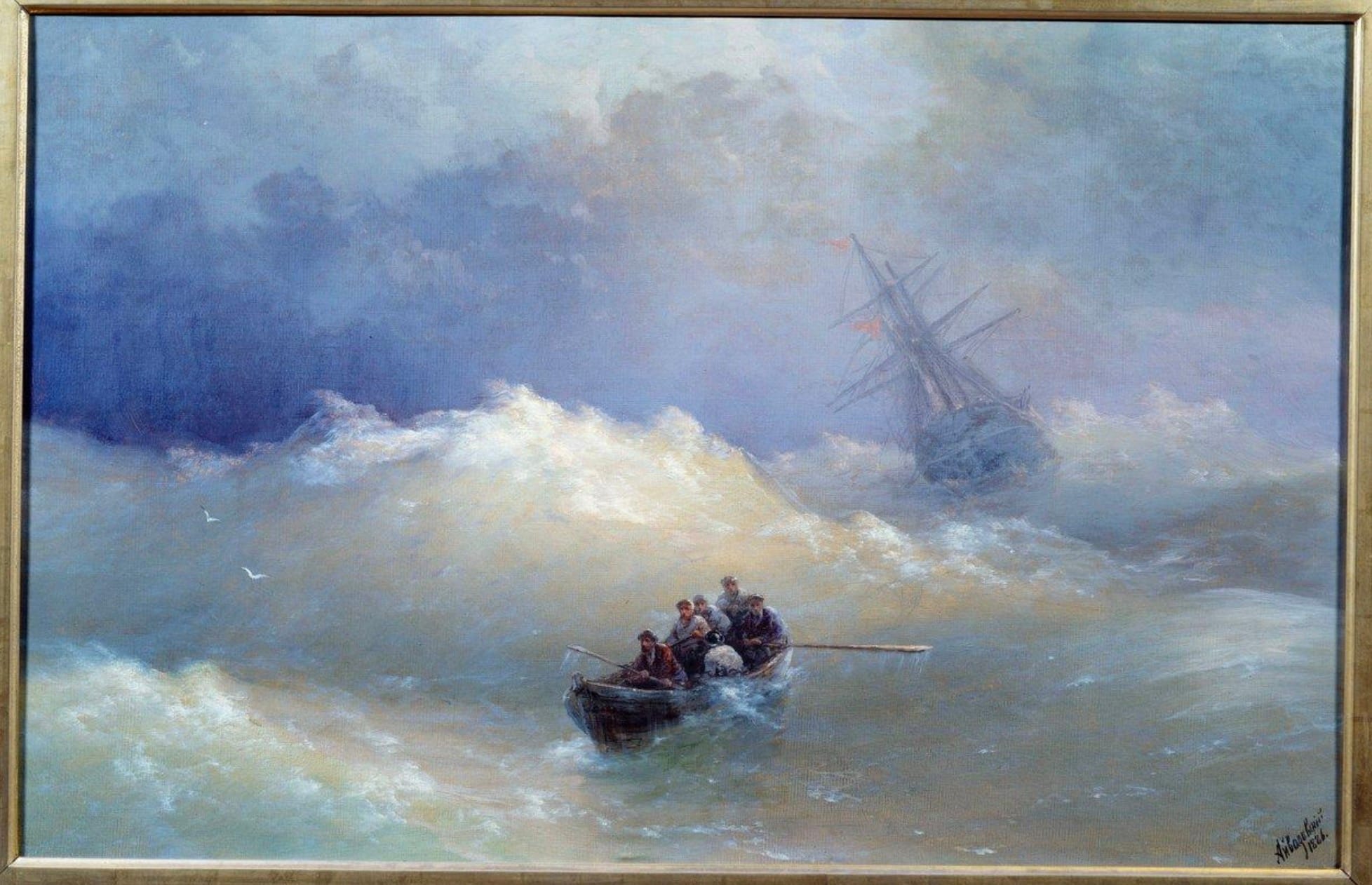
The vessel was beginning to fill.
And Jesus?
He was asleep. On the cushion, in the stern.
One almost smiles at the irony. Had He led them into this disaster only to sleep through it? No. He was simply exhausted. After giving everything to others throughout the day, His body demanded rest.
The overturning boat.
The crashing waves.
The shrieking wind.
The spray of water flying across the deck. How could all this fail to wake Him?
Finally, it was not the storm that woke Him. It was their cry.
"Teacher, do You not care that we are perishing?"
Διδάσκαλε, οὐ μέλει σοι ὅτι ἀπολλύμεθα;
The question begins with οὐ (ou), a form that normally expects a positive answer.
This is not really, "Do You care?"
The force is closer to: "Surely You care, don't You?"
"We know You care. We are certain of it. We simply cannot understand how You can sleep while we are about to die."
And perhaps that is why this story feels so familiar. We know He cares. We have seen His faithfulness before.
Yet in the moment of disaster He appears motionless. Silent. Seemingly absent.
The storm outside becomes a storm within.
The circumstances begin whispering that God's silence must mean God's absence.
"He who keeps Israel shall neither slumber nor sleep."
Jesus rose.
Without panic.
Without haste.
Without struggle.
Mark uses the same verb ἐπιτιμάω (epitimaō)—"to rebuke” in Jesus' confrontations with demons earlier in the Gospel. The same verb appears in this account:
"Peace. Be still." Σιώπα, πεφίμωσο (Siōpa, pephimōso) — "Be silent! Be muzzled!"
Like a roaring lion ready to devour, the sea in instance turned into a purring cat at its Master's feet.
At that moment a favorite portion of Tehillim came alive before their astonished eyes:
"They mounted up to heaven, they went down to the depths; their courage melted away in their evil plight... Then they cried to the LORD in their trouble, and He brought them out of their distress. He made the storm be still, and the waves of the sea were hushed." (Psalm 107:26–29)
Then Jesus turned from the storm to the disciples.
"Why are you afraid? Do you still have no faith?"
Again the Greek is important.
The second question begins with οὔπω (oupō), meaning "not yet," "still not."
This is not a neutral question. It carries an expectation. Jesus is not genuinely asking whether they possess faith or not. He expects that, after all they have observed.
"After everything you have witnessed, has your faith still not matured?"
A great responsibility had been entrusted to them. They were to care for their exhausted Teacher, bringing Him safely across the lake. One thing was expected of them on the basis of everything He had already revealed about Himself—understanding Who He is.
They had seen demons flee.
They had watched diseases surrender.
They had heard authority unlike any rabbi before Him.
Jesus expected that their experience of Him would produce deeper trust.
The issue was not the total absence of faith. After all, they ran to Him. They believed He could do something.
Three great (μεγάλη) realities dominate the passage:
The great storm became a great calm.
The great calm mutates into great fear.
They feared something greater than the storm.
They feared the One Who commanded it. They feared their Master.
"Who then is this, that even the wind and the sea obey Him?"
This question stands at the very center of Mark's Gospel.
The miracle is not a rescue mission.
It is another revelation of Christ concerning Himself.
Psalm 89 declares:
"You rule the raging of the sea; when its waves rise, You still them."
Job 38 portrays God setting boundaries for the waters:
"Thus far shall you come, and no farther."
And I would not be surprised if Mark intentionally leaves us with Peter's question, because four chapters later the same lips finally provide the confession:
"You are the Christ."
The presence of Christ does not prevent storms.
Faith is not the absence of danger.
The greatest question is not, "How large is the storm?"
The greatest question is:
"Who is in the boat with you?"
Will you rely on the revelation He has already entrusted to you about Himself—or on something else?

Member discussion: