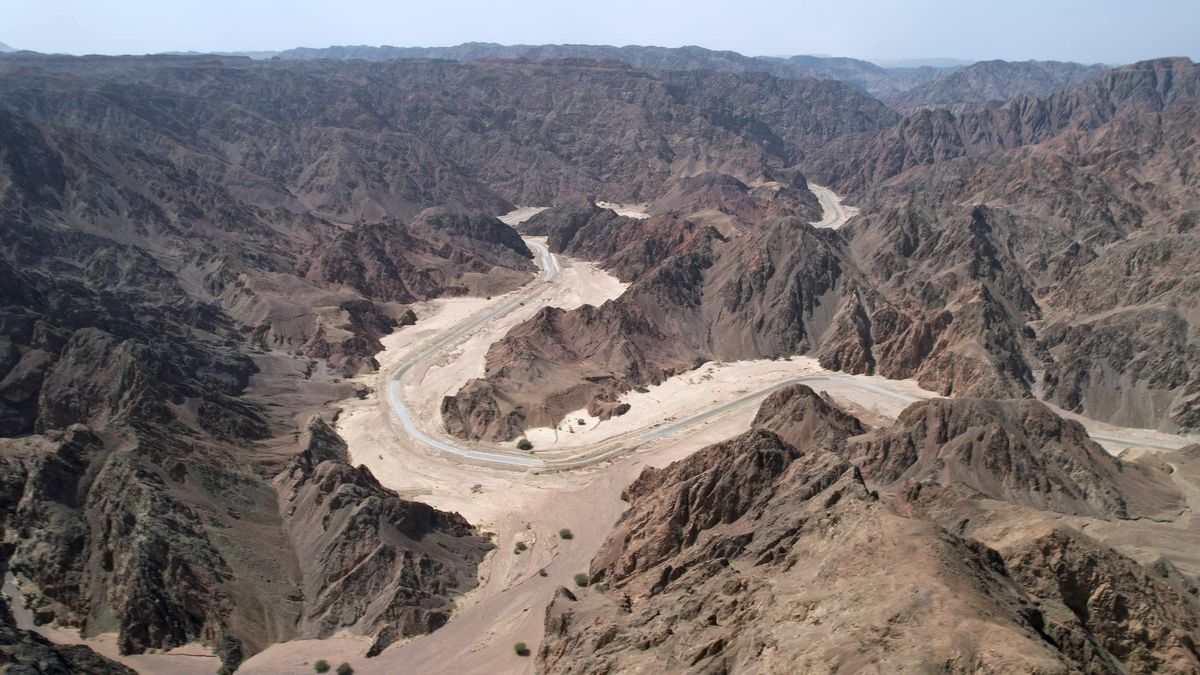
We left our scene at the moment when “…about six hundred thousand men on foot, besides the children (women, elderly — author’s remark*)” (Ex. 12:37) left Egypt, with their hearts set on reaching the Promised Land as soon as possible.
The full number of trevelers would naturally rise—easily reaching 2 to 2.5 million people.
Exodus 13:18 records:
“And God led them by the way of the wilderness of the Sea of Reeds, and the sons of Israel went up חֲמֻשִׁים (ḥamushim) from the land of Egypt.”
By purpose I left this ambiguous word non translated.
The term חֲמֻשִׁים resists a single, narrow translation. It may be rendered “armed,” yet you feel that it might be not very consistent with the nature and spirit of the Exodus itself, where the people depart not as a conquering force, but as those led and sustained by the hand of God.
The root—חָמֵשׁ (ḥamesh, five)— gives us strong semantic directions: arranged, grouped, aligned. Many interpreters hear in the root the echo of formation— marching not as chaotic mass, but ordered groups.
It resonates with the structured world Israel had long inhabited: in the New Kingdom, Egyptian military organization was built around large, disciplined divisions—numbering in the range of five thousand soldiers (as noted by Kenneth Kitchen, Ramesside Inscriptions, and Anthony Spalinger, War in Ancient Egypt). While no direct numerical correspondence can be drawn, the conceptual parallel remains striking: movement shaped by order, bodies arranged under the command of leaders.
A memory of such order seems to echo by the Jewish historian of the first century, Josephus Flavious: “They left Egypt in good order, and in a regular manner, and were under the conduct of their rulers” (Antiquities of the Jews, II.315–316).
Already a few chapters later, in Exodus 18, this emerging order takes on clear form: leaders of tens, of fifties, of hundreds, and of thousands. What was developing at the beginning of the journey becomes articulated in full structure later.
And by the time we reach the book of Numbers, the picture stands fully developed: a camp ordered around the Tabernacle, each tribe in its place, each banner fixed, each step aligned with purpose.
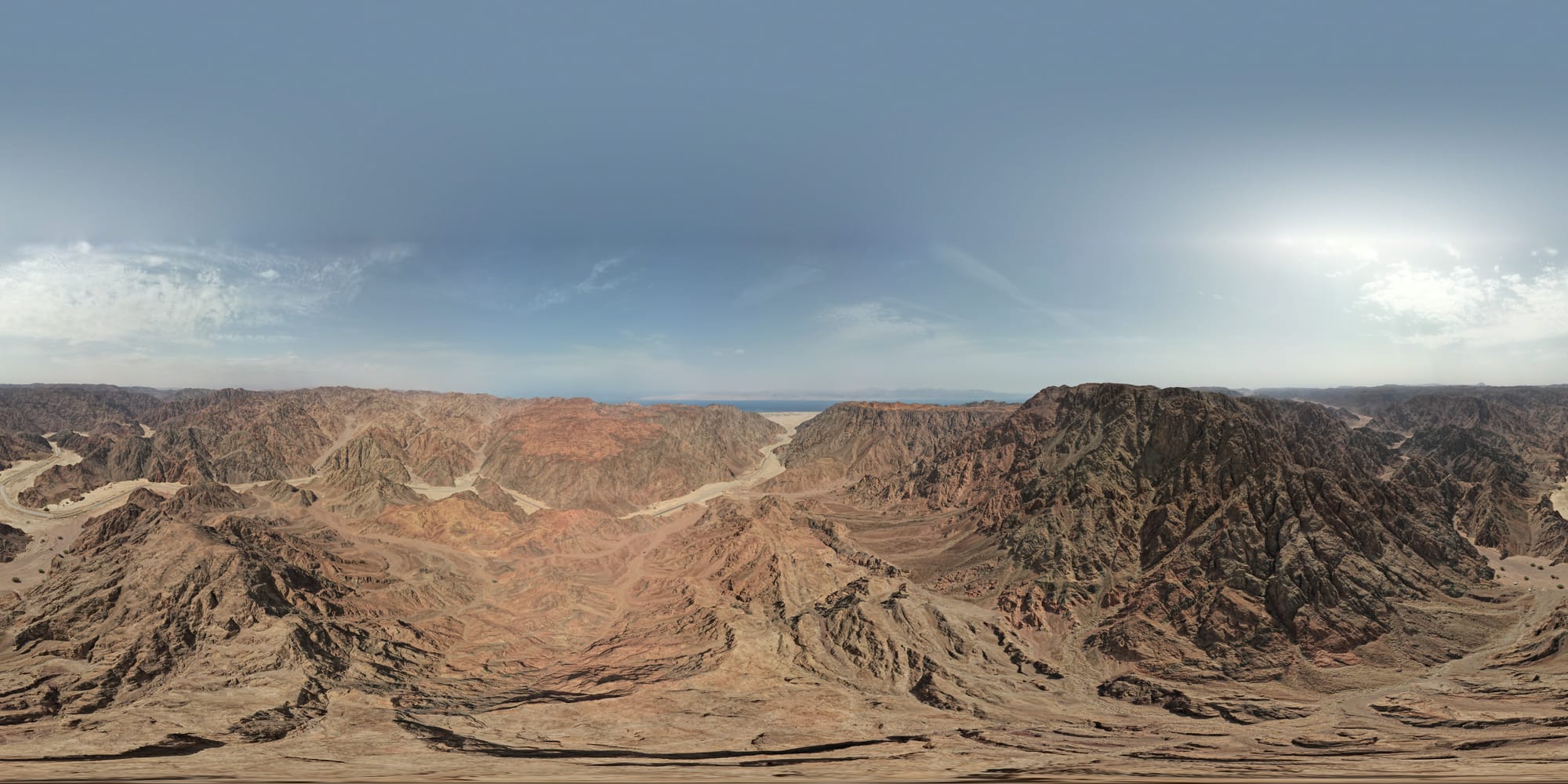
Now we come to the most exciting part of the pre-crossing Sinai Peninsula journey—the stretch of road I had long looked forward of travelling, seeing with my own eyes, feeling the sand beneath my feet.
“Then the LORD spoke to Moses, saying,
‘Speak to the children of Israel, that they turn back/reverse direction (וְיָשֻׁבוּ - veyāshuvu) and encamp before Pi-hahiroth, between Migdol and the sea…”(Ex. 14:1, 2)
A profound significance lies in the root שׁוּב (shuv)—to return, to turn back, to go back—also known to us as repent. Suddenly, the road bends sharply—almost 135 degrees—reversing direction and leading the wanderers into a dry canyon. It is the place where Israelites leave the established trade route and head toward the Gulf of Aqaba.
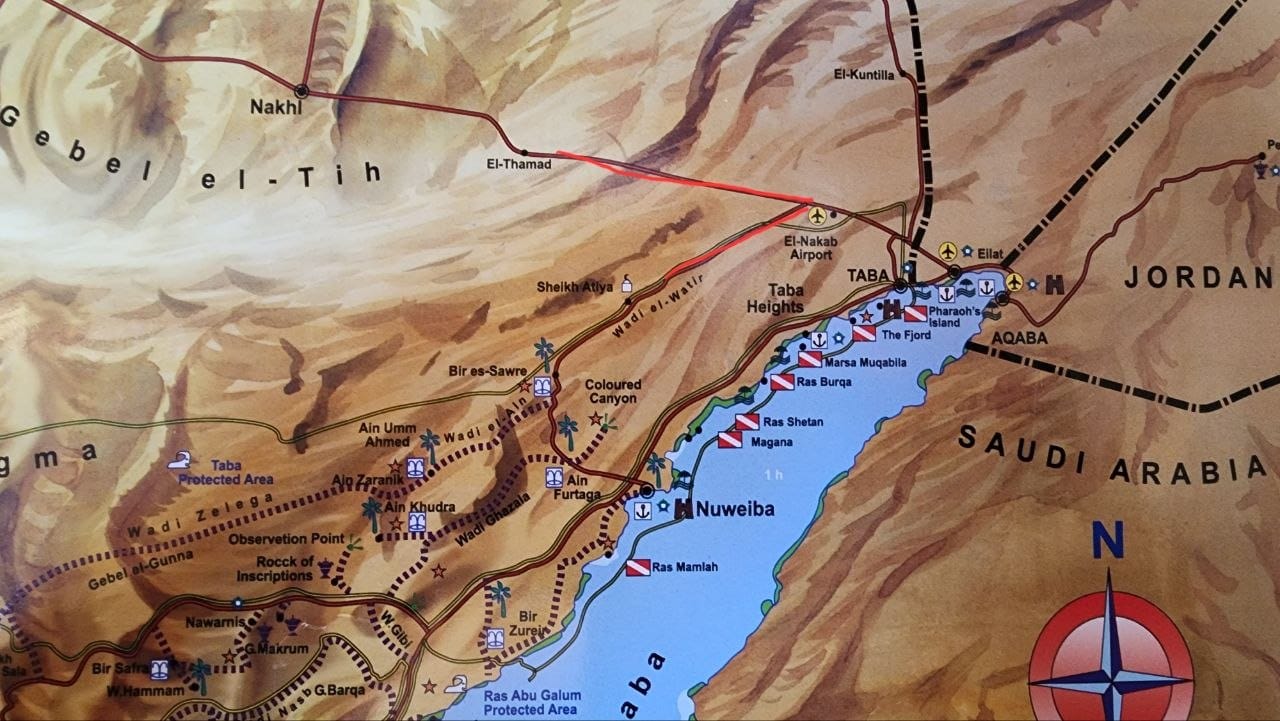
It was not easily reached. Imagine the sand dunes—a 4×4 safari drive through shifting light and heat. That is exactly how it begins… and then it becomes something more.
Roadblocks appear at irregular stretches all the way. And at the final turn—so close to the desired destination—the young officer denies our Egyptian driver entry: “permits must be issued in advance.”
But for the two Bedouins beside us— dark sun-worn skin beneath white robes, faces lined by the desert, eyes narrowed from light and sand into a constant smile—the roadblock is no hindrance. With them, the desert opens its backyard to its owner.
Here we are: Wadi Watir.
It is more magnificent than I had imagined.
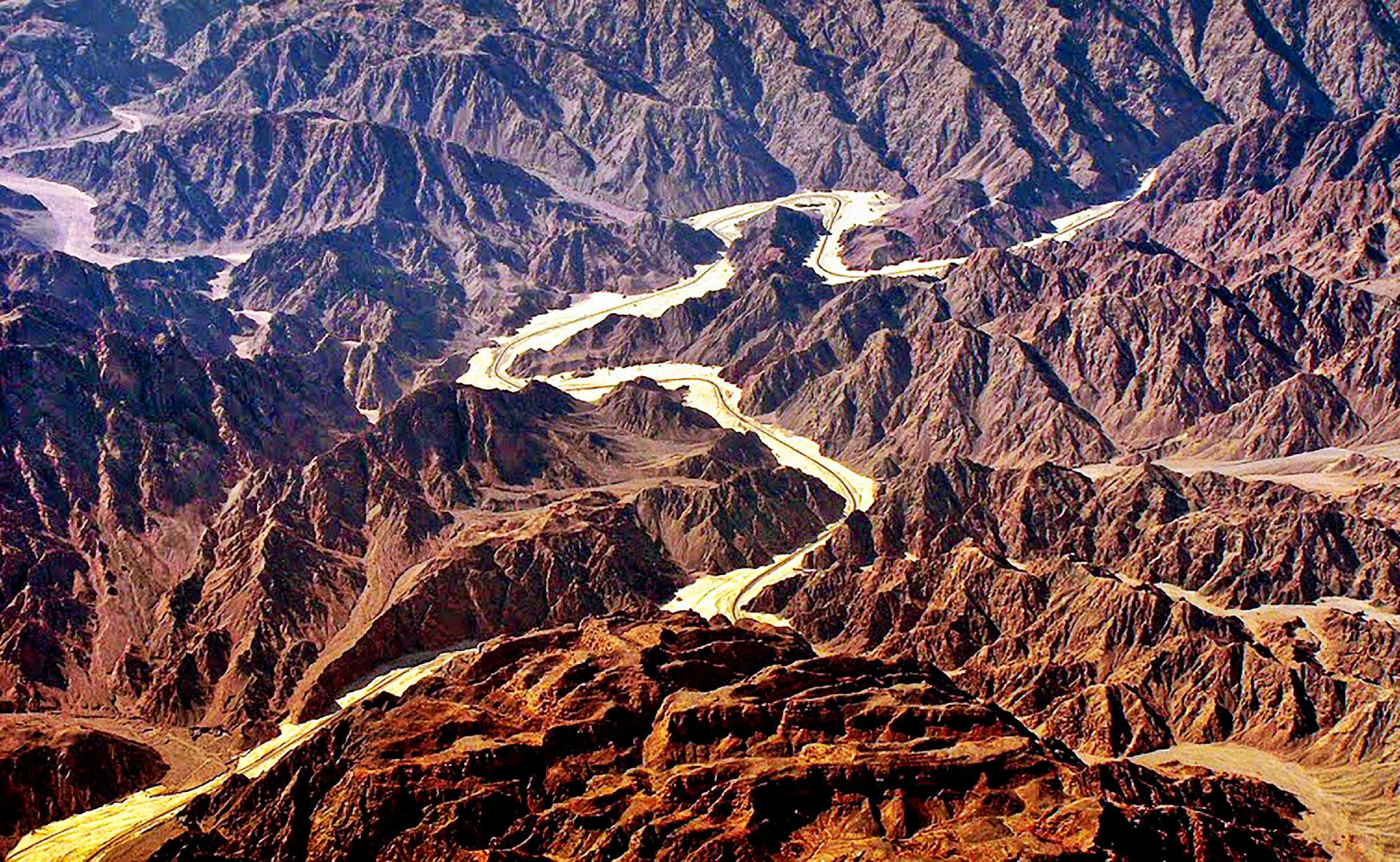
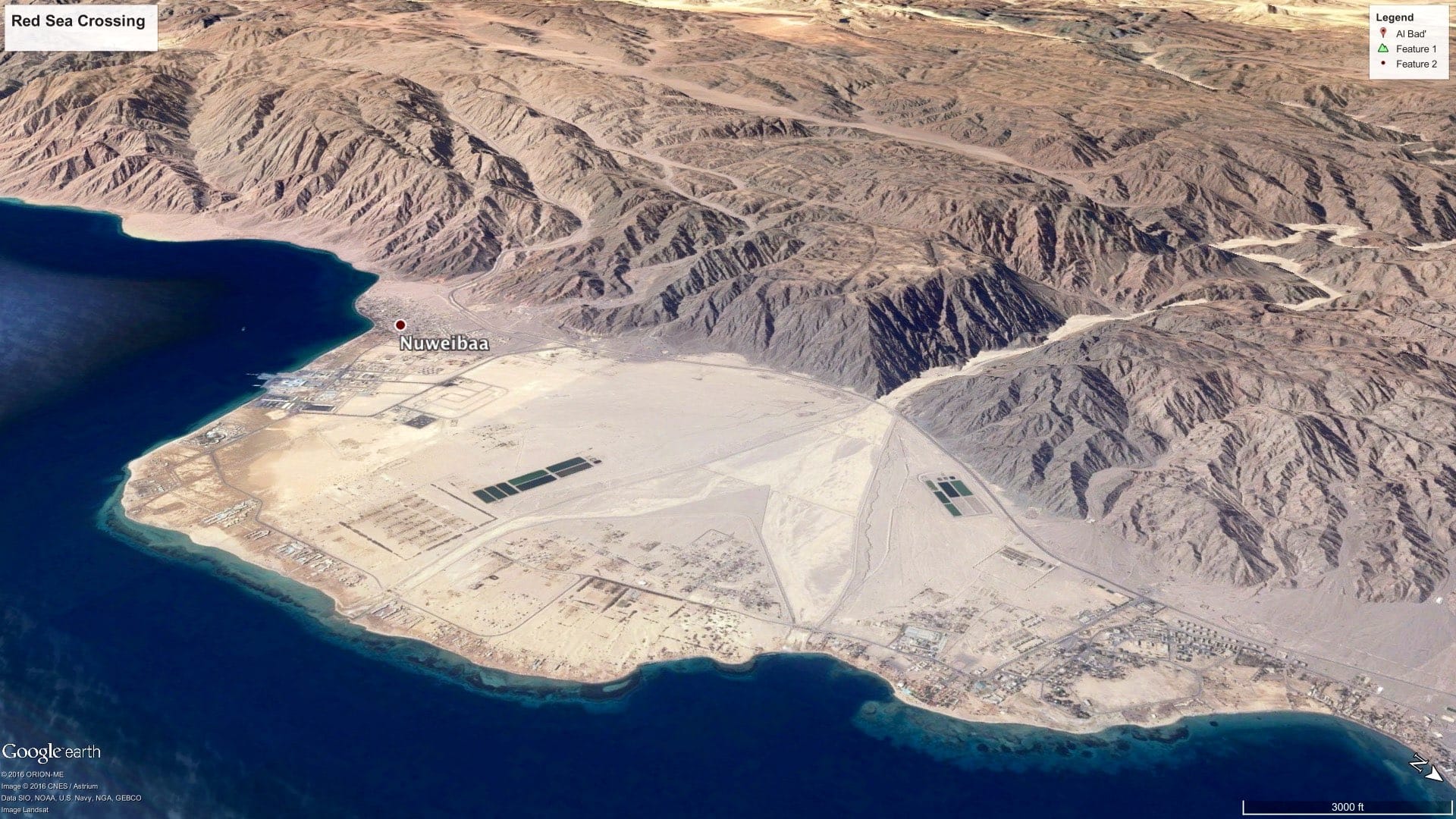
An ancient dry riverbed, stretching for some sixty km, beginning far inland, winding all the way down to the shores of Nuweiba, where it opens wide into the Gulf of Aqaba.
It gathers into a single, wide channel—at times stretching broad and open, at others narrowing into a winding corridor. Its course bends and turns, never straight, shaped entirely by the memory of water that once rushed through it.
Underfoot, the ground is a thick layer of sand and gravel—soft in places, coarse in others—formed from the fragments of mountains worn down over ages. The wadi floor feels both firm and shifting. I almost sense the echo of millions of sandals pressing into the sand and small mountain stones.
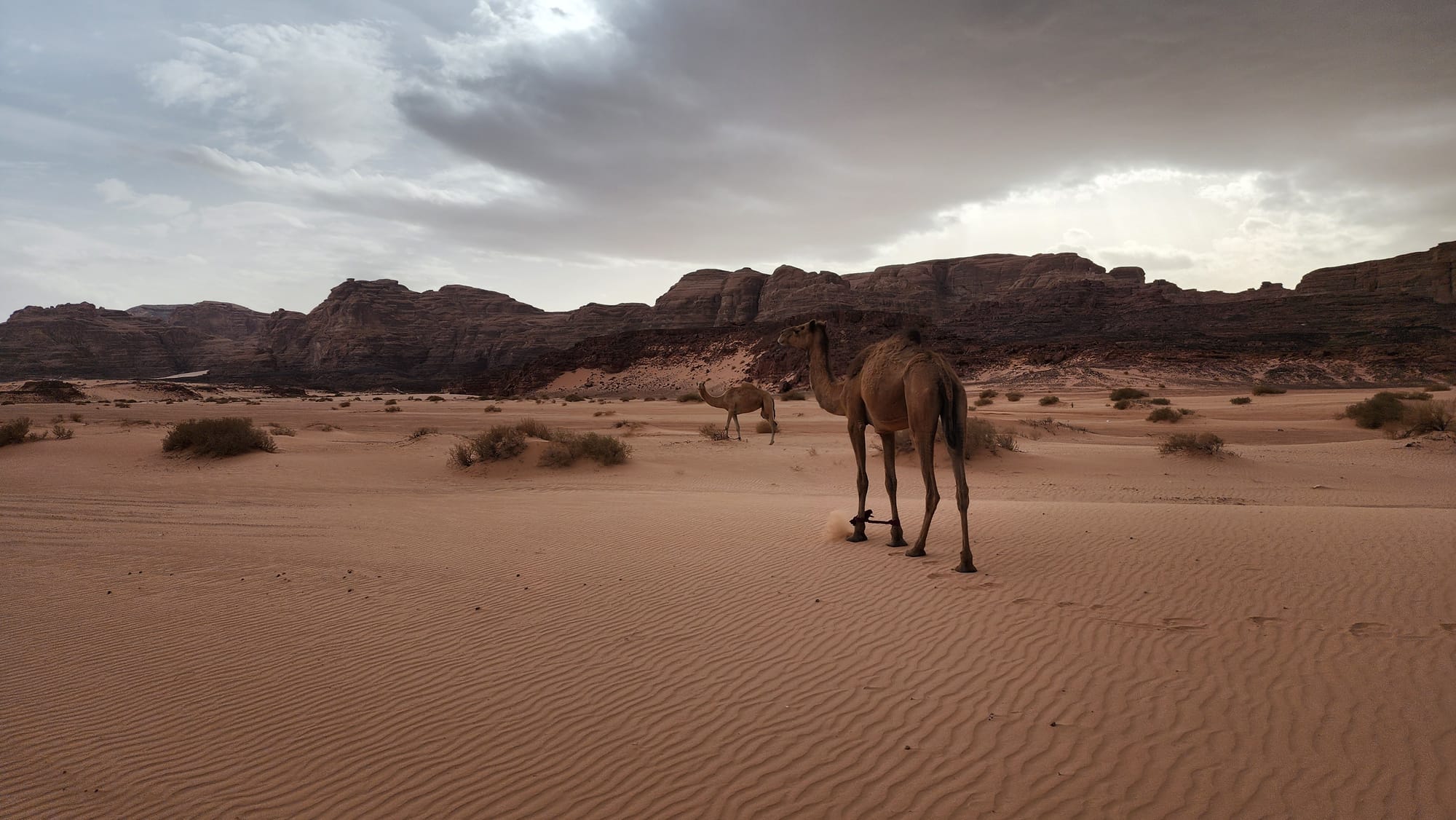
On either side, rugged mountains rise sharply—ancient, fractured, lifting to great heights. There is no escape, no turning aside. At times they press close, forcing you into narrow rows; then they withdraw, opening suddenly into a broad passage—almost like a highway.
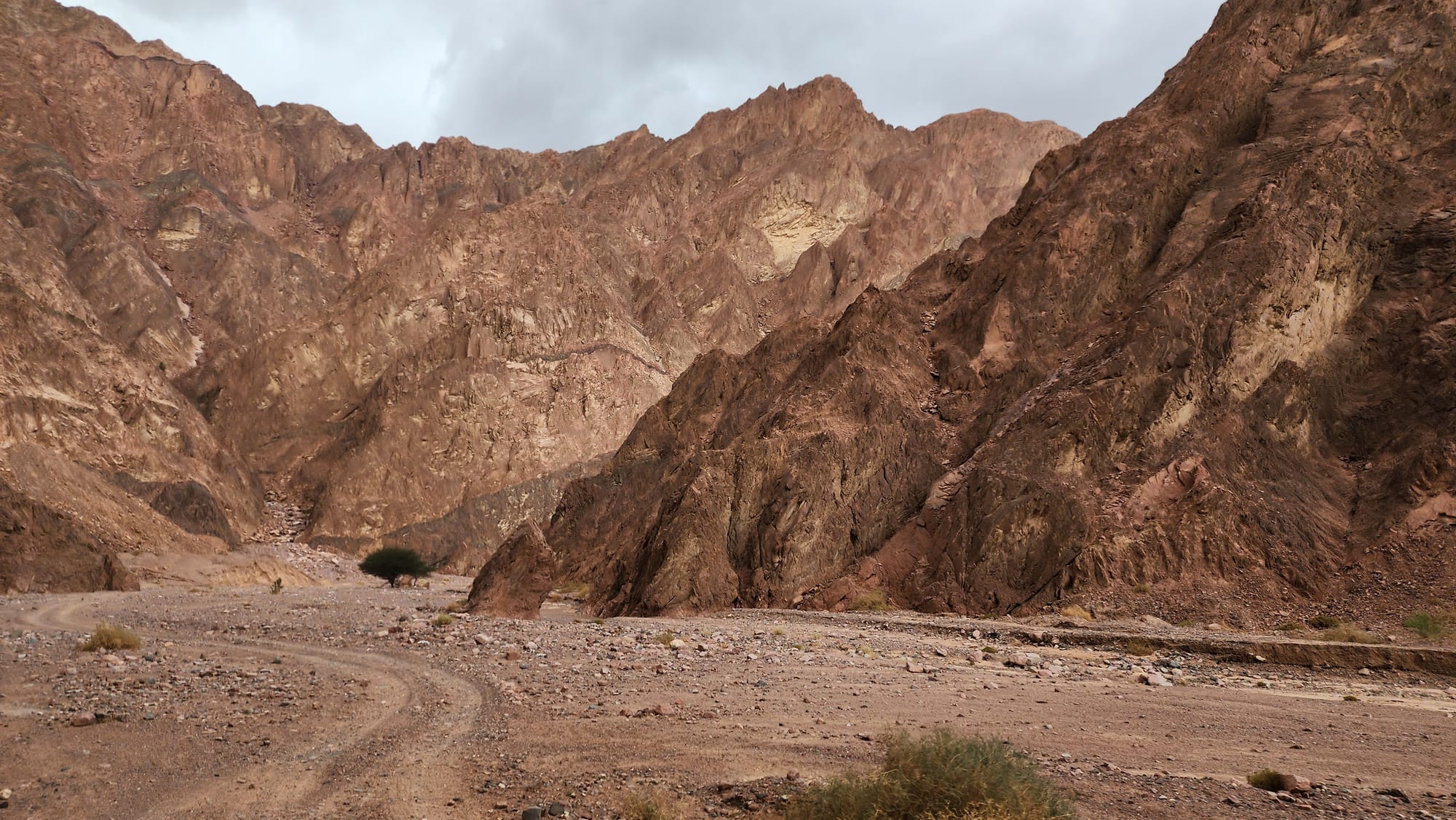
The geography itself becomes part of the narrative:
A natural corridor.
A passage cut through the mountains,
leading—inevitably—down to the sea.
Our friendly Beduins were showing their hospitality: for the first time I witnessed the unveavened bread made in few minutes from scratch in the hot sand, simple picnic in the middle of the desert.
The enleavened bread baked in the hot sand.
To be honest, I was a little apprehensive to chew this bread. Rough desert sand on the teeth, and Bedouins as the host chefs? Yet with a prayer and thoughts on the running-out water resources of the Israelite camp, by grace we survived it gloriously. And inscribed in memory—the food flavours, the extraordinary setting during seven-day haste-filled observance of the Feast of Unleavened Bread.
This is not a modern formation, but an ancient cave—silent, keeping the hidden secrets of the Exodus story. When the moment arrives and we stand before the Master of the scene, we will ask for its recounting.
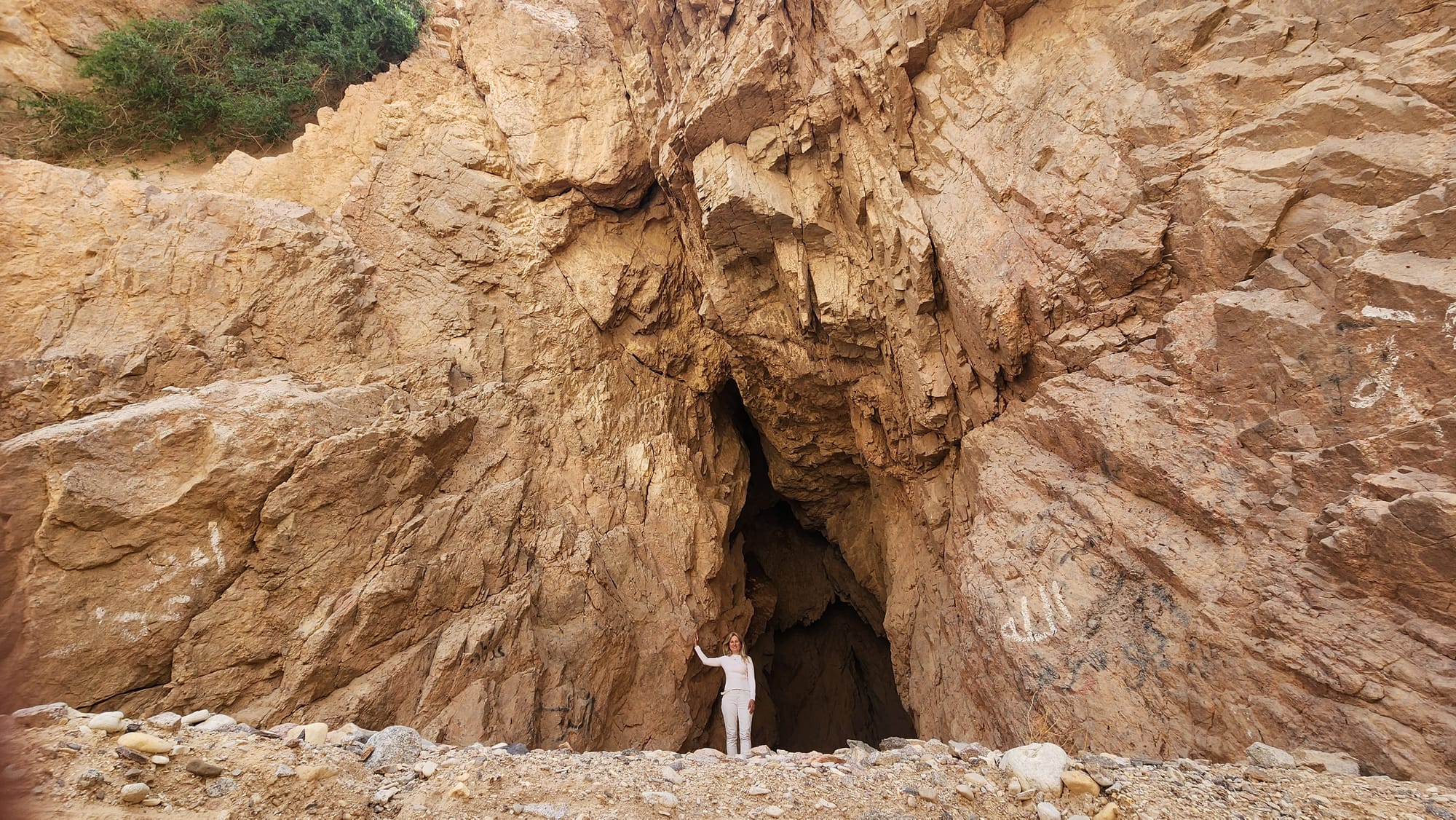
I was thinking—perhaps this natural enclosure, the one we are using for the picnic, held the same quiet allure for Israel.
It may have been here—precisely here—that the journey reached its breathless edge.
Behind them, the advancing force of Egypt.
Around them, the wilderness closing in—
a tightening wall of stone and silence.
And before them, the sea.
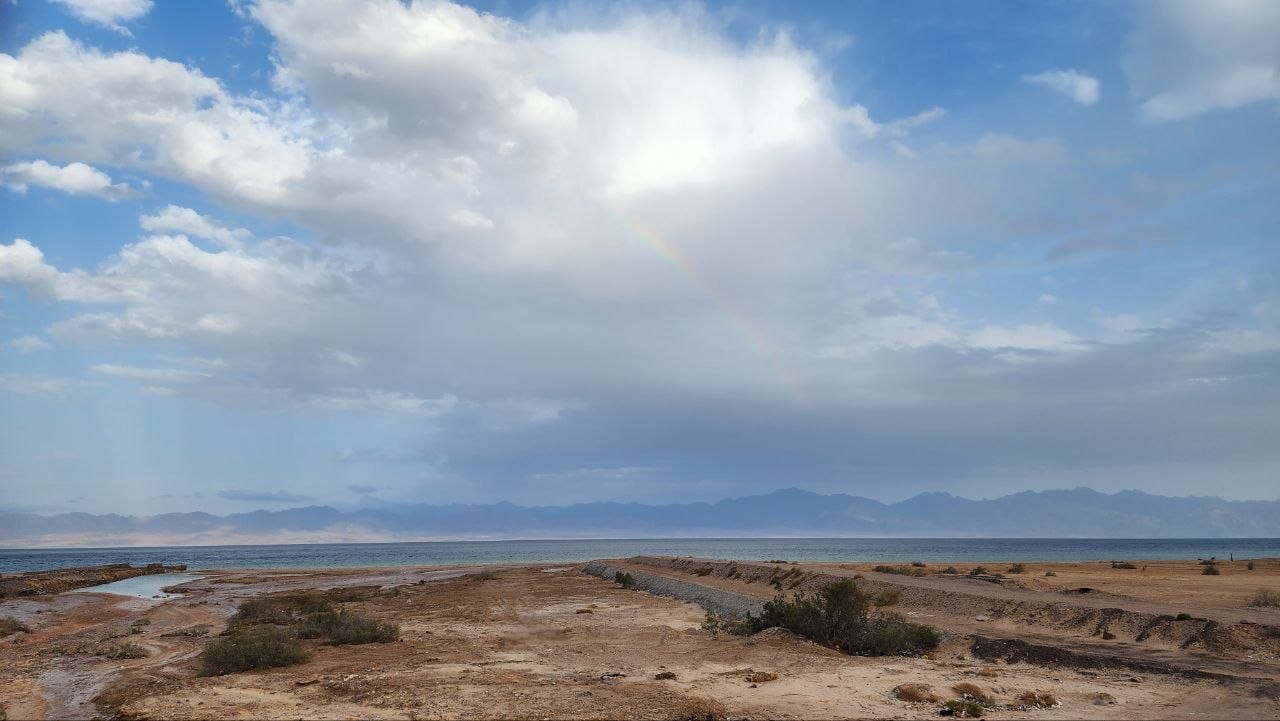
In reverence and gratitude, we witness—on that very place—the brief appearing of the sign of the covenant before our eyes. It was breathtaking.
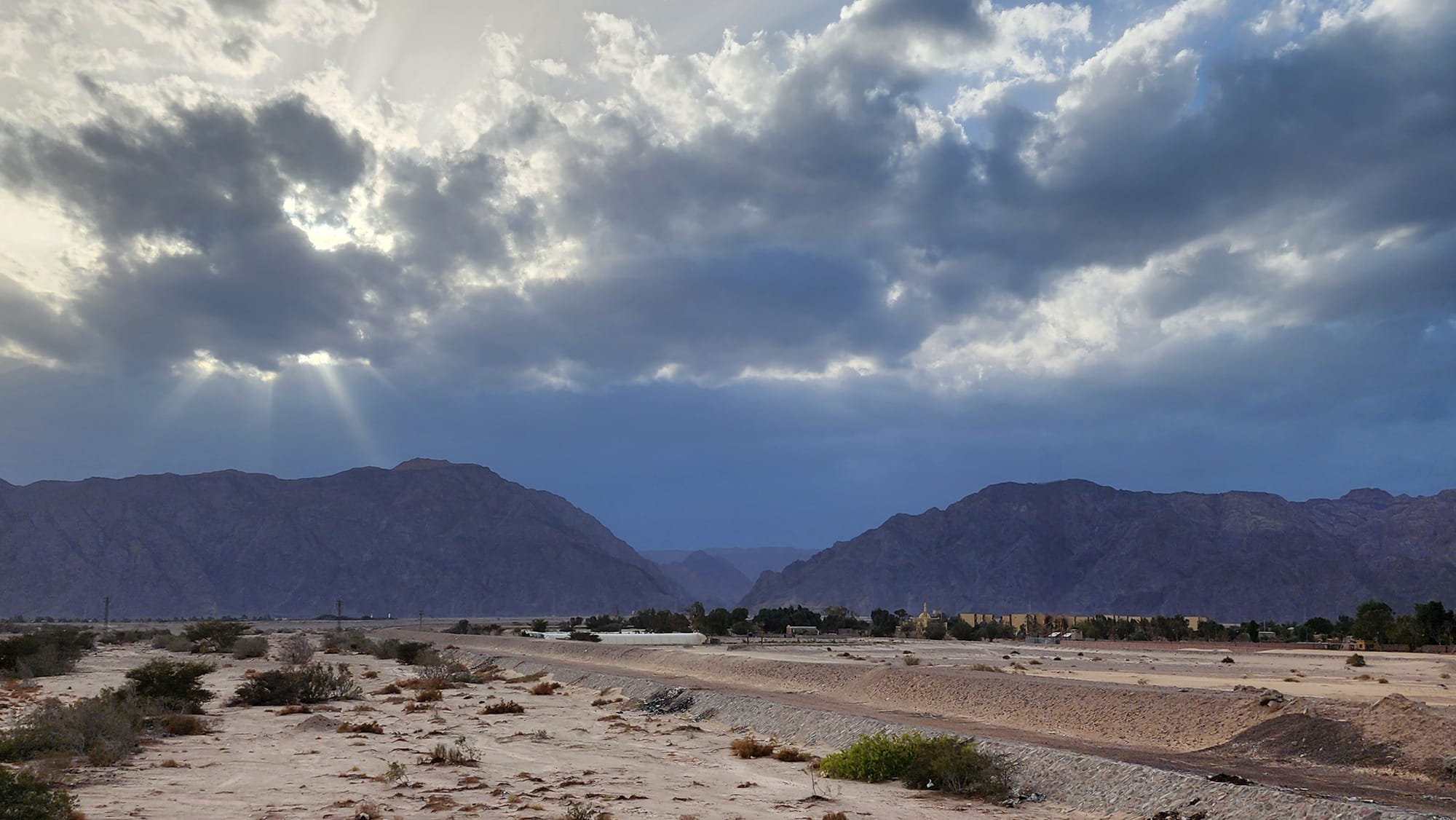
Anything is persuing you today on this narrow path of the life journey?
“Do not be afraid. Stand still, and see the salvation of the LORD…
the Egyptians whom you see today, you shall see again no more forever.” (Ex. 14:13)

Member discussion: