Under the Stretched Curtain: Seeing the Heavens with Hebrew Eyes

The Hebrew language, as with any language, is bound to the culture of its speakers. When reading the Bible—whether in Hebrew, English, or any other tongue—we must learn to see through Hebrew eyes rather than impose our own cultural lenses. Isaiah 40:22 offers a vivid case:
“It is He… who stretches out the heavens like a curtain and spreads them like a tent to dwell in.”
From our modern vantage—galaxies, gas giants, and deep-space images—we might assume “heavens” refers to a cosmic architecture of stars as distant suns. That picture, however accurate in astronomy, is not Isaiah’s. Isaiah speaks from the lifeworld of tents, cloth, cords, and wind.
Inside a Hebrew goat-hair tent (אֹהֶל ’ohel) the roof appears black. Yet light pierces through tiny gaps between the woven fibers, creating pinpoints that shimmer in the dark—stars on a living textile. For Isaiah, the night sky resembles God’s tent stretched over His family—the world.
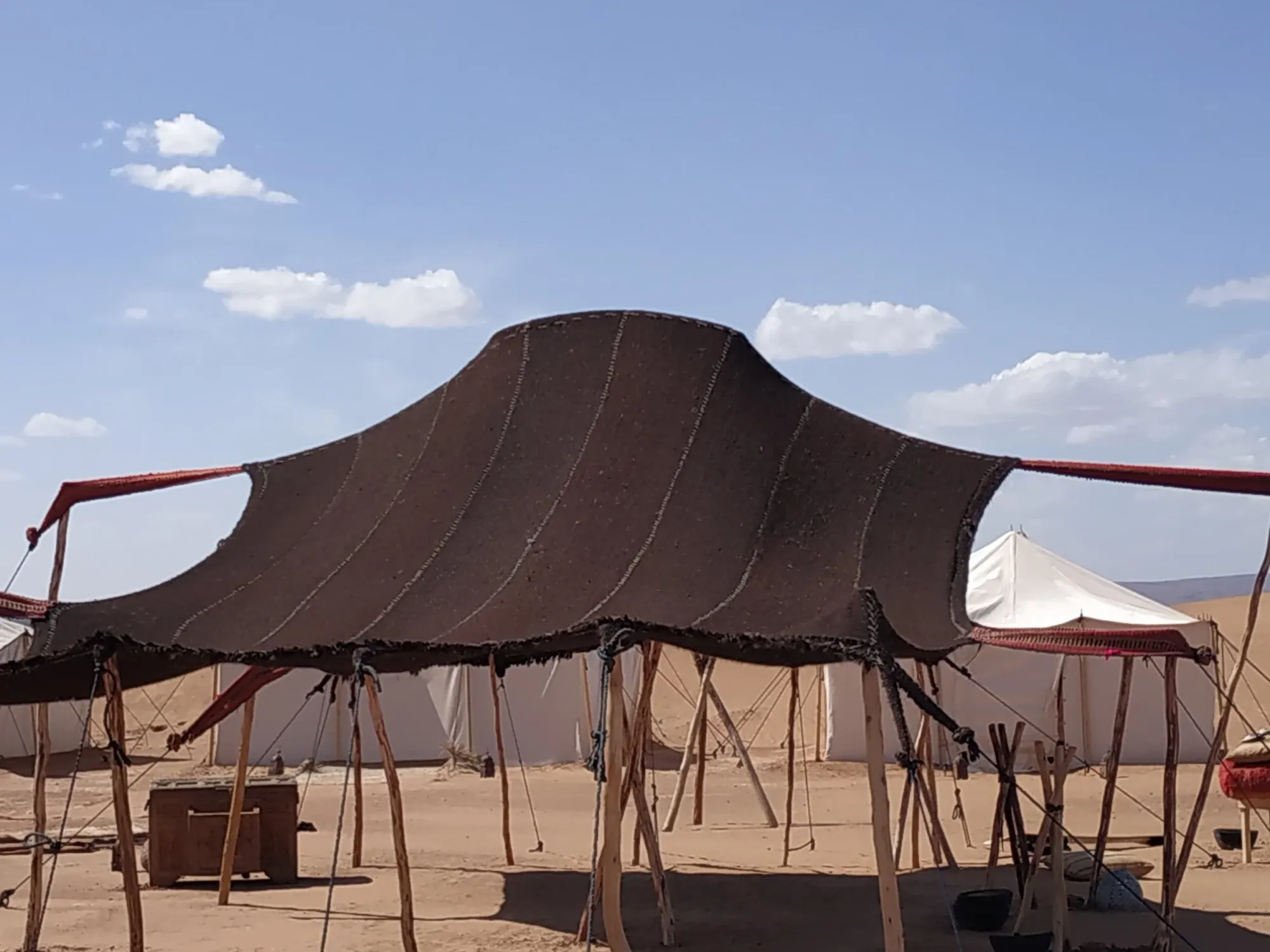
The verb נָטָה (natāh), “to stretch, to spread, pitch, or draw out (a cloth, a line, a tent)” belongs to weavers and tent-makers; it is the craft-verb of everyday life. Paul from Tarsus used it daily.
Bedouin goat-hair textiles swell when wet, tightening the weave against rain, and contract when dry, reopening breathing pores—a sky that “tightens” in storm and “opens” in clear night. The camp teaches the cosmology: cords pulled taut, edges staked, fabric billowing—heaven as habitable canopy.
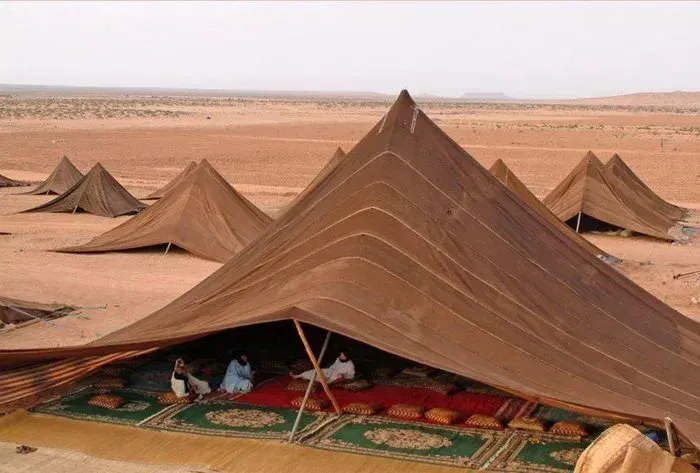
The “curtain” is יְרִיעָה (yerīʿāh), the very word for the woven panels of the Tabernacle (Exod 26:1), and elsewhere Isaiah evokes a gauzy veil, דֹּק (doq) (Isa 40:22b), a thin cloth through which light can shimmer. Genesis speaks of the expanse as רָקִיעַ (rāqīaʿ), hammered-out metal spread thin (Gen 1:6–8).
This is why the Psalms sing, “He wraps Himself in light as with a garment; He stretches out the heavens like a yerīʿāh” (Ps 104:2).
Job joins the chorus: “He alone stretches out the heavens” (Job 9:8), as does Zechariah: “YHWH… who stretches out the heavens and lays the foundation of the earth” (Zech 12:1).
Scripture’s poetics are consistent: the cosmos is a tented dwelling, not a cold, vast space. It is a home, pitched for communion. God is not merely remote; He is the מַחְסֶה (maḥseh), the Dwelling. The Shelter. In the same time He pitches the world/home for us. Faith, then, is learning to live under the stretched yerīʿāh (curtain)—receiving creation not as a diagram but as a home.

To read biblically, then, is to honor the metaphors of the makers—weavers, smiths, potters—whose hands gave Scripture its imagery. Isaiah invites us to step inside the tent, sit in the cool shadow, and watch as the evening light stitches bright threads across the dark cloth overhead. Only then do we grasp why the heavens are a curtain, and why theology in Hebrew sounds like craft.