The Last Steps Before Passover
It was just before the Passover Feast. John 13.
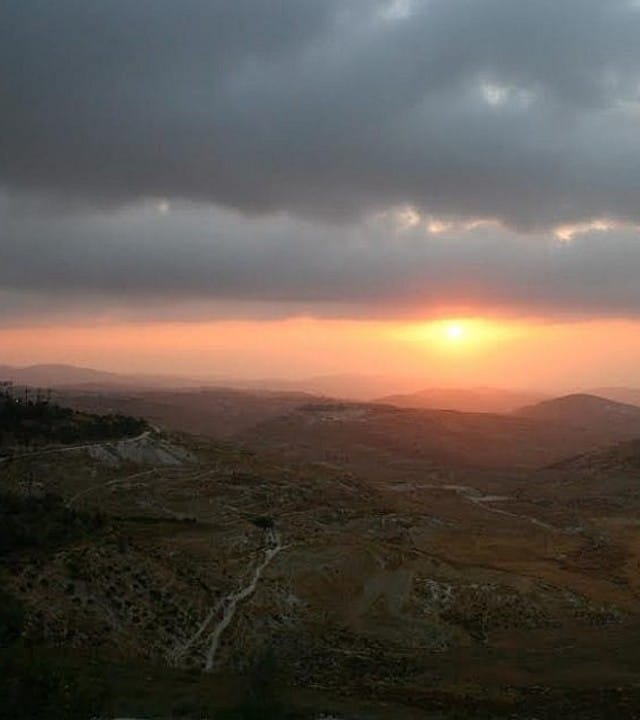
The sun was slowing down to the horizon like the rabbi reclining at the table, ready to convey his most sacred teaching into the ears of his disciples.
It bled the strips of the deep colour like a heart-breaking warning: Danger! Danger!
Jesus was steadily walking up the serpentine steep hill from the Kidron Valley up to the slope of Mount Moriah.
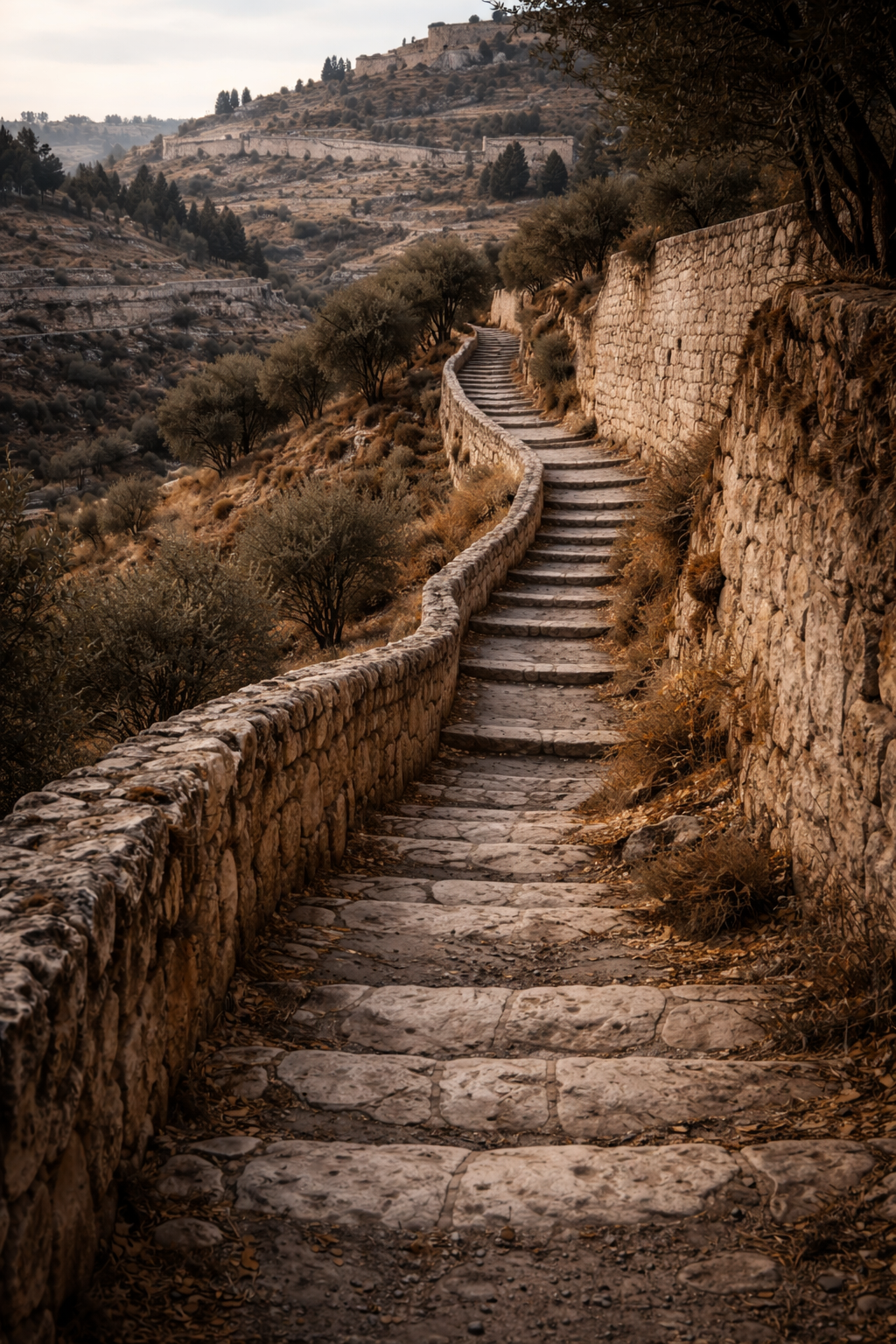
It was His last, unattended, free-will entrance into Jerusalem.
The rest of the disciples were waiting for Him in the upper room, as He directed them.
Every His step resounded with a heavy heartbeat.
Every move is a willed decision to go in spite of everything.
Every breath is a prayer for strength from the Father.
The last meters of climb, the unbearable heaviness, pressure seems to grip every cell of His body.
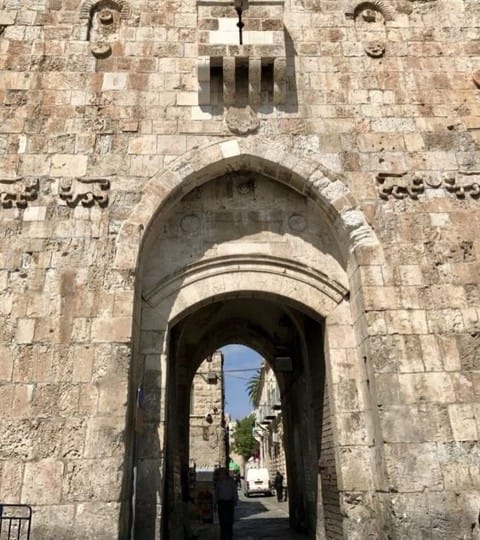
Huge bolted doors of the Sheep Gate were still open.
An unending line of carts with sheep passed through the gateway—merchants and stores with bleating animals destined for the Temple sacrifice.
Does your eye still spot Him, unnoticed, slipping through the narrow street?
The Lamb of God who takes away the sins of the world.
On the right—the Pool of Bethesda, where the feet of the animals would be ritually washed from soil and dust, preparing them for the altar.
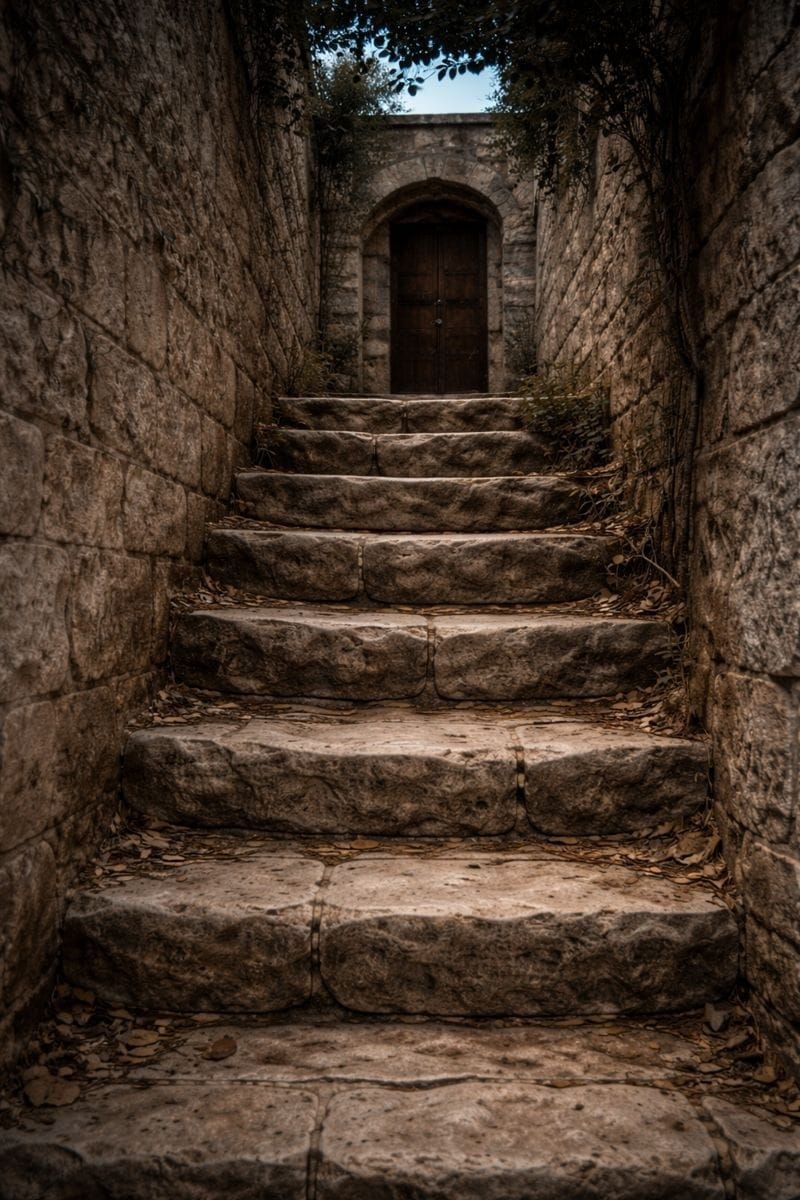
Finally, the high stone steps to the Upper Room.
Jesus knew that the hour had come for Him to leave this world and go to the Father. Having loved His own who were in the world, He loved them to the end.
The evening meal was in progress, and the devil had already prompted Judas, the son of Simon Iscariot, to betray Jesus.
Jesus knew that the Father had given all things into His hands, and that He had come from God and was returning to God;
So He got up from the meal, took off His outer garment, and wrapped a towel around His waist.
He poured water into a basin and began to wash His disciples’ feet, drying them with the towel around His waist. (John 13:1–5)
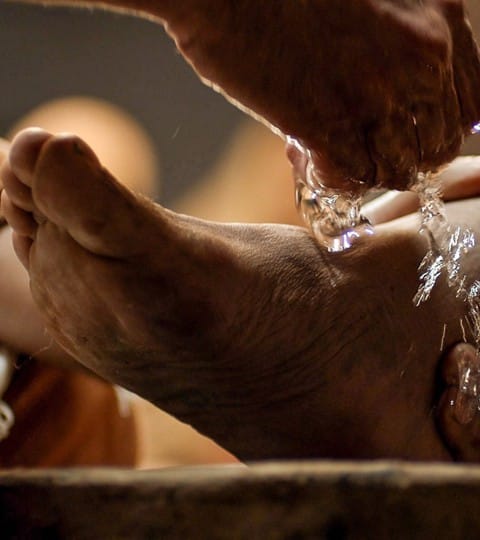
A very unexpected, strange-for-understanding act of the Messiah.
For the people who shared the meal with Him, His actions also seemed not logical.
The Passover dinner—the Seder—may last for hours, from sunset till midnight, with quotations from Scripture, dialogues, hymns, and prayers. A whole liturgy.
During the dinner, Jesus breaks the routine and gets up.
He came to Simon Peter, who said to Him, “Lord, are You going to wash my feet?”
Jesus replied, “You do not realize now what I am doing, but someday you will understand.” (John 13:6–7)
Let us pause here for a moment. There are two statements to remember:
- You don’t understand what I am doing now.
- Time will come when you will come to understanding.
Keep this in mind.
Peter’s response is sharp:
“No ways,” said Peter, “You shall never wash my feet, ever.”
A very strong negation in the Greek: “By no means will You wash my feet—not now, not ever!”
Jesus answers calmly and firmly:
“Unless I wash you, you have no part with Me.”
Literally, “We have nothing in common together.”
Maybe Peter from that moment got a glimpse.
Then he says: “Not just my feet, but my hands and my head as well!”
Jesus answered, “He who is bathed needs only to wash his feet, and you are clean, but not all of you.”
This is another thought I want you to remember.
When He had finished washing their feet, He put on His clothes and returned to His place.
“Do you understand what I have done for you?” He asked them.
Do we understand what Jesus did—and what others do—when they wash our feet?
“You call Me ‘Teacher’ and ‘Lord,’ Rabbi, and rightly so, for that is what I am.
Now that I, your Lord and Teacher, have washed your feet, you also should wash one another’s feet.
I have set you an example that you should do as I have done for you.” (John 13:10-15)
We normally hear a social explanation on that passage: dusty roads, so a servant washes the guest’s feet.
Reasonable, but superficial.
It is not text-based.
Let us explore something deeper—something you might have never heard before.
The first persecution of Christians was by Emperor Nero (67–68 CE).
He blamed the believers for the great fire of Rome.
Peter was crucified upside down. Paul executed.
And the rest of the disciples—each met a martyr’s death.
Jesus washed the feet of men whose destinies He already knew:
Andrew crucified on an X-cross,
Thomas pierced with spears,
Philip tortured in Asia Minor,
Matthew stabbed,
James stoned,
Simon killed for refusing idolatry,
John surviving boiling oil.
None of them were signed for the peaceful death.
This is very important to understand in the context of the passage.
After the Passover meal, Christ got up and washed His disciples’ feet...
Where else in Scripture do we find that ritual?
The Book of Leviticus.
The first book Jewish children traditionally study.
Over forty direct allusions in the New Testament.
Leviticus 1:1–3 describes the burnt offering—the offering symbolizing total surrender.
When a person decides he needs such an offering:
He lays his hand on the head of the burnt offering, and it will be accepted to make atonement.
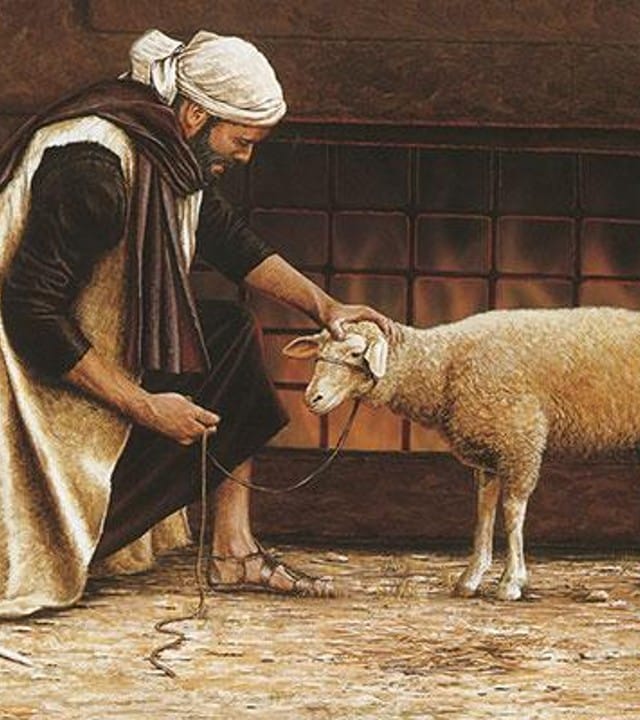
No confession, no listing of sins—because this lamb symbolizes you.
Unity with God restored. The heart of worship.
Then comes the ritual:
Leviticus 1:9
“וְקִרְבּוֹ וּכְרָעָיו יִרְחַץ בַּמָּיִם”
“He shall wash its inner parts and its legs (hooves) with water.”
This is done where the sacrifice is prepared — at the north side of the altar (Lev 1:11), which is outside the actual Tent of Meeting.
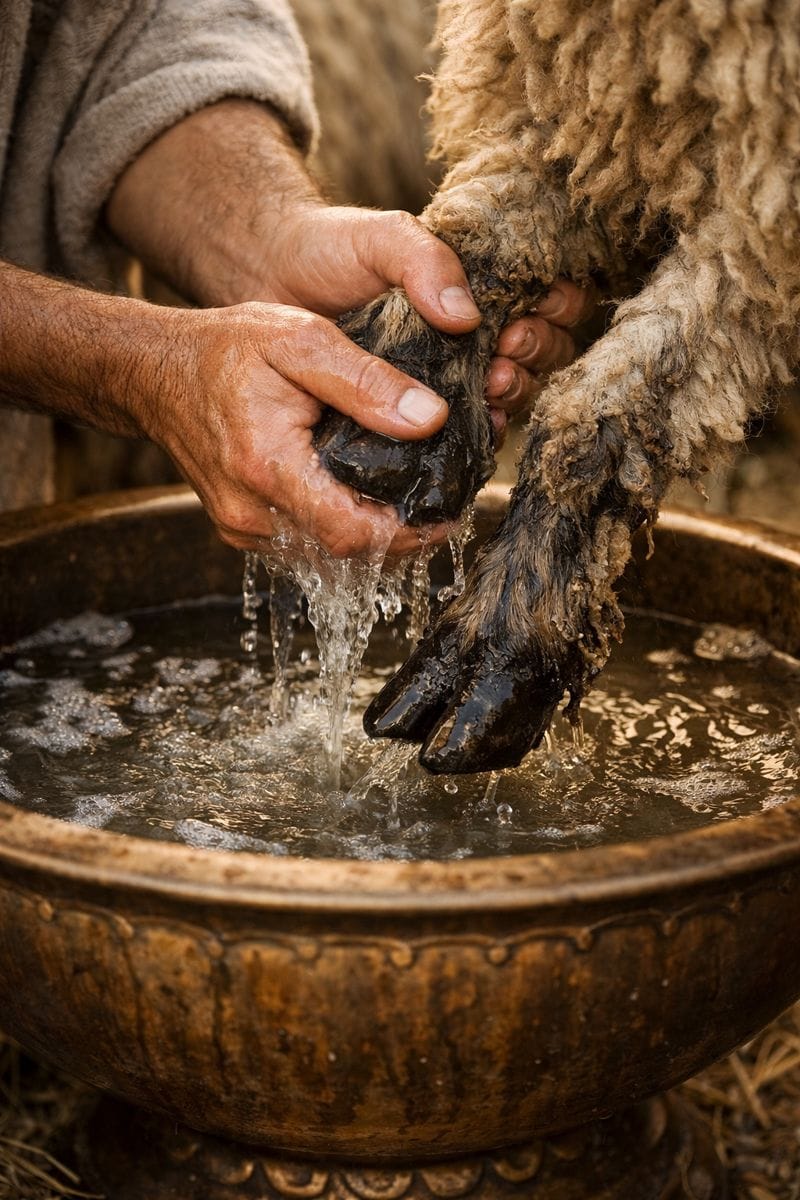
Two ritual washings:
→ the insides
→ the feet
This is the key.
In Judaism, ritual washing (נְטִילַת יָדַיִם Netilat Yadayim) is symbolic.
Hands are prepared beforehand; the ritual water simply runs over them.
Jesus is not performing hygiene.
He is performing a priestly act of consecration.
A Levitical act.
He washed their hearts throughout His ministry—
now He washes their feet to follow Him.
He is preparing them to become an offering.
You may ask:
Why did nobody wash Jesus’ feet that evening?
Because it had already been done.
Five days earlier.
John 12: Mary of Bethany poured pure spikenard—one of the sacred Sanctuary oils—over His feet.
Jesus said: “She has prepared My body for burial.”
His feet were washed.
Now He washes theirs.
We are participants in the great cosmic conflict.
We have taken the side of Christ.
If we live like Him, we will bear His sufferings—physically, emotionally, spiritually.
Next time when you wash the feet of your brother or sister,
understand what you are doing:
You are preparing each other
to become a sacrifice—
at work, in family, in relationships,
in giving up cherished ideas,
in letting go of attachments,
in choosing humility over pride.
Foot washing is not an old servant tradition—
it is a Levitical ritual preparing a lamb for the altar.
And the roads in Jeruasalem were not more dirty than any other roads in Israel. Far more cleaner indeed.
It was a necessary act to show readiness to go up and serve,
to go and give up yourself,
your life,
your heart—
to people and to God.
When again you wash someone’s feet, think what Christ did when He washed Peter’s, Andrew’s, Matthew’s feet...
He was preparing them to follow
His example,
His destiny,
His sacrifice.
“If you know these things, blessed are you if you do them.”
May God bless you,
support you,
strengthen you,
build you up,
and give you the indescribable joy of being a living sacrifice for Him.