The Feasts, the Nations, and the One God.
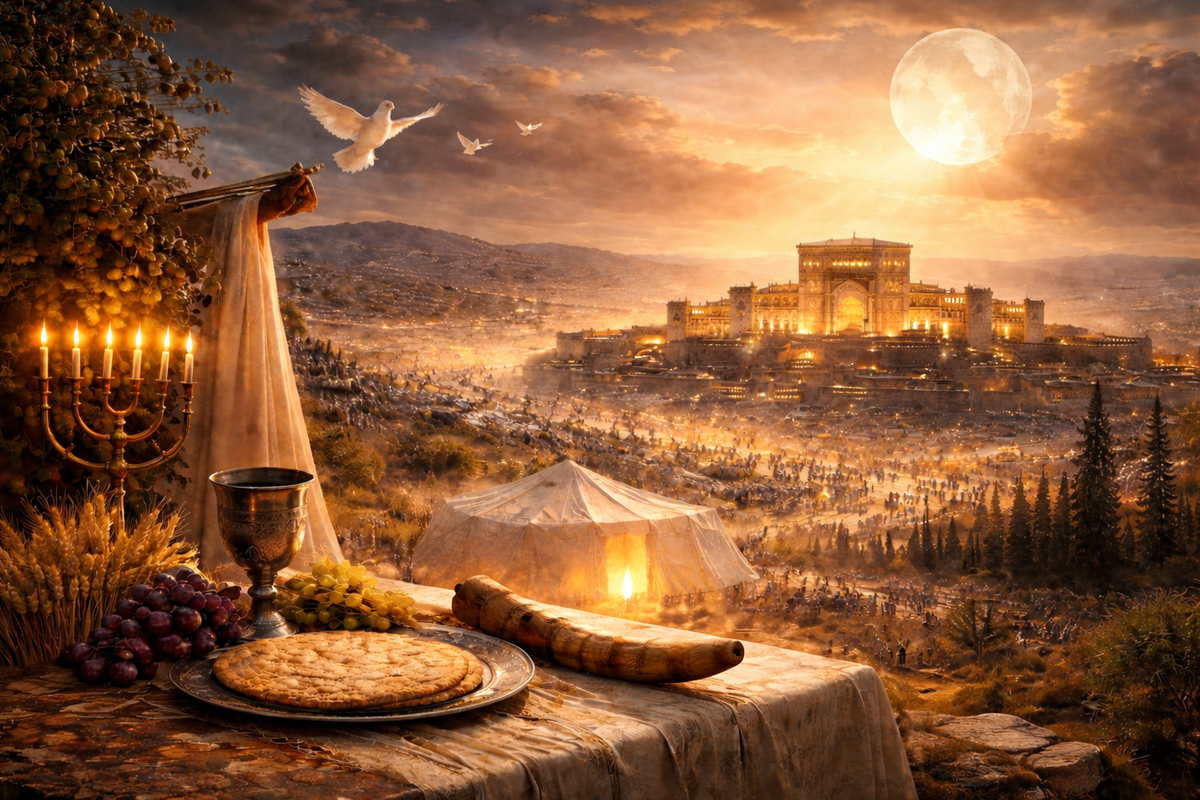
For Christians, the question of observing the biblical feasts of Israel — or more precisely, the Feasts of the Lord described in Leviticus 23 — rests at a delicate and meaningful intersection of biblical theology, spiritual freedom, and personal conviction.
To approach this subject with balance and clarity, we must slow down and look carefully at several dimensions: the original purpose and design of these appointed times, their prophetic movement toward fulfilment in Jesus the Messiah, and the New Testament’s teaching concerning the freedom of gentile believers.
Only by holding these elements together can we begin to see the feasts not merely as ancient rituals, but as living windows through which the larger story of redemption comes into view.
Allow me to illuminate the semantic foundation of our discussion.
Appointed Time, Appointed Space.
The concept of appointed time appears already at the first page of Scripture, where God describes the purpose of the heavenly lights:
וַיֹּאמֶר אֱלֹהִים יְהִי מְאֹרֹת בִּרְקִיעַ הַשָּׁמַיִם… וְהָיוּ לְאֹתֹת וּלְמוֹעֲדִים וּלְיָמִים וְשָׁנִים׃ (Gen. 1:14)
And God said: Let there be lights in the expanse of the heavens… and let them be for signs, and for appointed times, and for days and years.” Here we encounter
מוֹעֲדִים (mo‘adim) —
appointed times, fixed meetings, divine appointments.
From the very beginning, timeline itself is not random. It is structured by God. The heavenly bodies are not merely sources of light; they are markers of sacred rhythm, the history, the times.
Within the Hebrew calendar — which is fundamentally lunar — this becomes especially meaningful. The moon is not simply a reflector of sunlight; it functions as the visible marker by which time is measured. Through its cycles, Israel recognizes the appointed times, the rhythm of worship, and the unfolding of covenant history. The new moon opens the month, from where we can count the feasts:
· Passover — 14th day (1st month)
· Unleavened Bread — 15th day
· First Fruits — during that week
· Shavuot — counted from First Fruits
· Yom Kippur — 10th day (7th month)
· Tabernacles — 15th day (7th month)
Without identifying the new moon, none of these dates could be recognised.
The moon signals the sanctification of sacred seasons — marking the appointed times and annual Sabbaths of the Lord — while the weekly Sabbath flows from the original rhythm of creation itself.
מוֹעֵד (mo‘ed)
carries a remarkable depth that is often lost in translation.
It is commonly rendered as appointed time, yet its semantic range reaches further. In Scripture, mo‘ed does not describe only a moment in time — it also describes a meeting place. One of the four main designations for the Tabernacle of Moses is
אֹהֶל מוֹעֵד — Ohel Mo‘ed
“The Tent of Appointment” or “Tent of Meeting” or “Canopy of Festive Gathering”
Here, the same term used for the feasts appears again — not as a date, but as a place.
The sanctuary is the space of meeting, just as the feasts are the times of meeting.
God sanctifies both:
- space — the Mishkan, the place where He dwells,
- time — the mo‘adim, the moments where He meets His people.
The two are inseparable.
Sacred space without sacred time becomes empty ritual.
Sacred time without sacred space loses embodiment.
Together they create encounter.
God instituted for Israel the feasts as sacred appointed times:
מוֹעֲדֵי יְהוָה אֲשֶׁר־תִּקְרְאוּ אֹתָם מִקְרָאֵי־קֹדֶשׁ אֵלֶּה הֵם מוֹעֲדָי׃ (Lev. 23:2)
“The appointed times of the LORD, which you shall proclaim as holy convocations — these are My appointed times.”
These feasts were far more than cultural celebrations or agricultural festivals. While deeply connected to the agricultural life of Israel, their purpose was theological.
They were divine signposts:
- reminders of God’s character,
- testimonies of His provision,
- and living rehearsals of redemption within Israel’s history.
The appointed times naturally gather into three pilgrimage cycles, reflecting the command that all males of Israel appear before the Lord three times each year in Jerusalem (Ex. 23:14–17; Deut. 16:16).
These pilgrimage feasts form the great rhythm of covenant life:
- Spring — redemption and beginning
- Summer — provision and revelation
- Autumn — judgment, restoration, and dwelling together.
Just as each biblical week is built upon a cycle of seven days, the biblical year is built upon seven appointed festivals — the מוֹעֲדִים (mo‘adim).
At the heart of both stands the Sabbath.
The weekly Sabbath and the annual Sabbaths share the same sacred language.
Both are called: שַׁבָּתוֹן (shabbaton) — a solemn rest, a sacred cessation.
Both are described within the framework of continual worship — תָּמִיד (tamid), something ongoing, perpetual, woven into the rhythm of life.
The feasts are not simply dates on a calendar; they are moments where heaven and earth agree to meet.
Just as sacred space is marked by Presence, sacred time is marked by appointment.
The moon measures it. Israel rehearses it. And through it, redemption is remembered again and again.
Seven Feasts in Set of Three.
When we talk about the seven feasts, we understand that they are grouped into three logical timebound sets, which is why Scripture often speaks of them in terms of three annual appearances before the Lord: “Three times in the year all your males shall appear before the Lord GOD.” (Ex. 23:17; cf. Deut. 16:16)
1. The four Spring Feasts — Passover (Pesach), Unleavened Bread, First Fruits, and Weeks (Shavuot / Pentecost) —
are rooted in the barley and early wheat harvests. Yet they do far more than mark agricultural cycles.
They speak of:
- deliverance,
- sanctification,
- resurrection life,
- covenant renewal.
Passover opens the cycle of feasts in the first month of Nissan as a redemption.
Ἴδε ὁ ἀμνὸς τοῦ Θεοῦ ὁ αἴρων τὴν ἁμαρτίαν τοῦ κόσμου. (John 1:29)
“Behold, the Lamb of God, the One bearing away the sin of the world.”
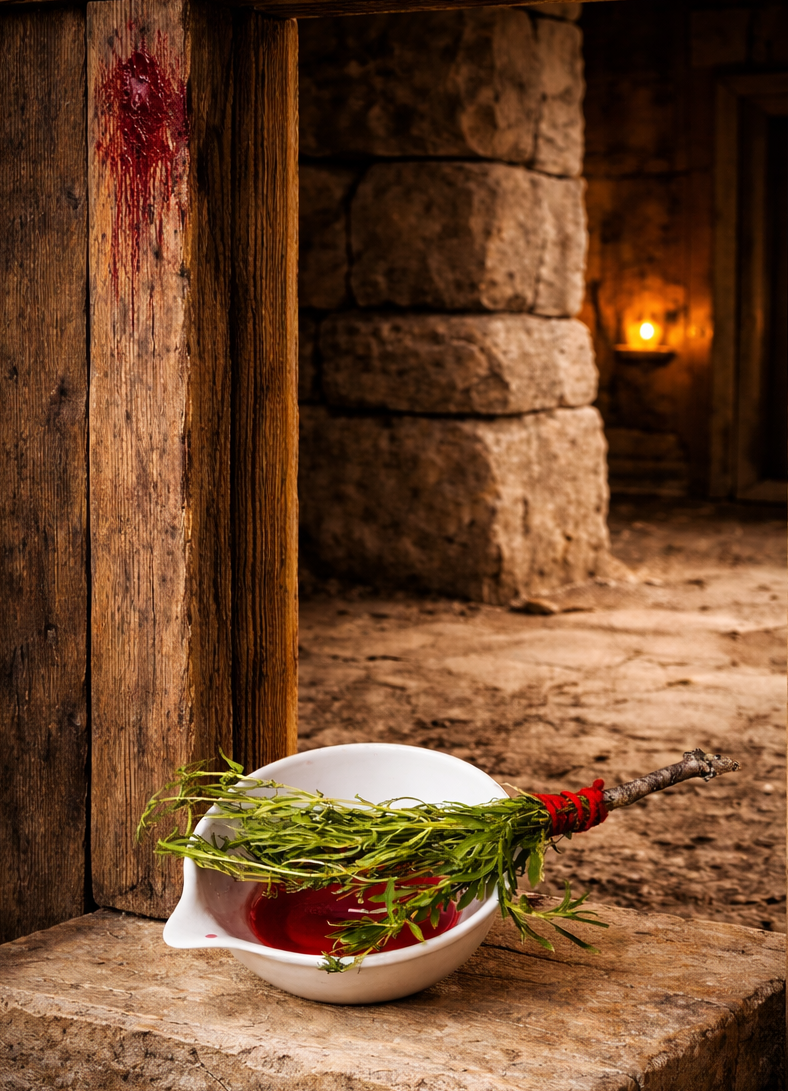
The Passover lamb was never just a historical memory of Egypt. It was a sign — a shadow cast forward in time: blood once marked doorposts in Egypt - the Lamb who marks the threshold between death and life.
The Feast of First Fruits celebrated the first sheaf lifted before the Lord — the pledge of the coming harvest, which finds its perfect fulfilment in the resurrection of Christ, whom Paul calls “the first fruits of those who have fallen asleep” (1 Cor. 15:20)
The first sheaf guarantees the harvest, firstling or first fruit (“firstborn” in many translations) will bring the rest to full sheaf. We remember that Christ is called "the Firstborn" (more correct translation: "Firstling") (Col. 1:15)
Fifty days after First Fruits comes Shavuot, the Feast of Weeks.
In Jewish tradition, it marks the giving of Torah at Sinai.
In the New Testament, it marks another divine descent: pouring of Spirit (Acts 2).
The Spirit is poured out, forming a covenant not written on stone, but inscribed upon hearts.
The fire of Sinai becomes the fire of indwelling Presence.
The rhythm continues — revelation, then empowerment.
2. The three Fall Feasts — Trumpets, the Day of Atonement, and Tabernacles —
all occur in the seventh month Tishrei תִּשְׁרֵי, the month of completion. They are connected to the final ingathering of harvest and carry themes of:
- awakening,
- repentance,
- national atonement,
- divine dwelling.
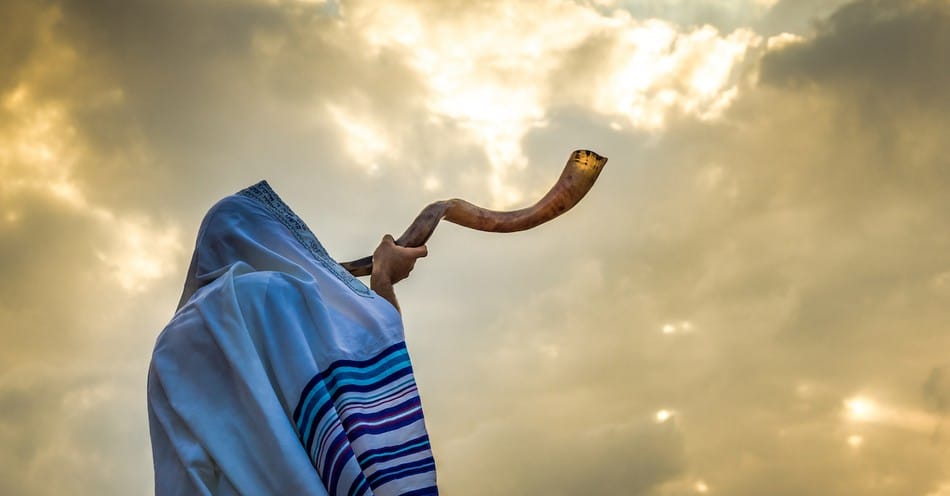
The Feast of Trumpets (Rosh HaShanah) foreshadows the Messiah’s return and the final gathering of God’s people with its blast calling to solemn assembly.
“…with the voice of an archangel and with the trumpet of God…” (1 Thes. 4:16–17)
The trumpet gathers.
The trumpet awakens.
The trumpet prepares for encounter.
Yom Kippur is the most solemn day of the entire year — the day of cleansing, judgment, and reconciliation.
“For Christ did not enter into holy places made with hands… but into heaven itself.” (Heb. 9:24)
Day of Atonement points to the final judgement, the cleansing of both people and the earth, and the full application of Christ’s atoning work through His High Priest’s unique entrance into the Holy of holies. (Heb. 9:24-28).
3. The Feast of Tabernacles (Sukkot) celebrates harvest and dwelling in the temporal shelters recalling dependence during the wilderness journey. It is as well joyful harvest celebration of God’s provision and “tabernacling” with Israel. The Feast anticipates a future great ingathering of all nations and eternal, jubilant reign of God’s children in the New Earth - Promised Land. Therefore, this feast will only find full fulfilment in the future and points to our great future reality.
“Behold, the dwelling (tabernacle) of God is with humanity, and He will tabernacle with them.” (Rev. 21:3)
Ἰδο ἡ σκην τοῦ Θεοῦ μετ τῶν ἀνθρώπων, κα σκηνώσει μετ’ αὐτῶν.
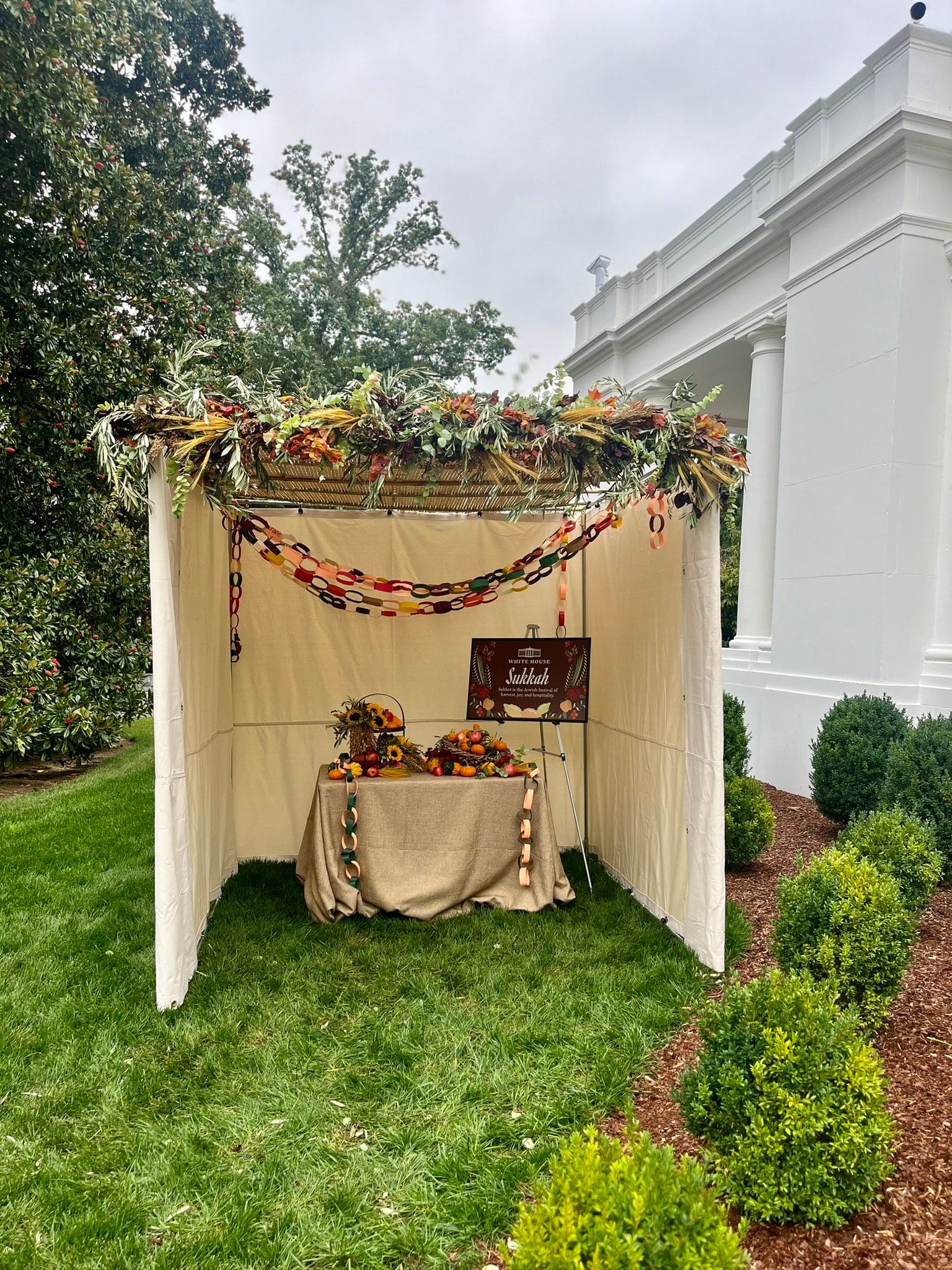
The wilderness tent becomes eternal habitation.
Temporary booths point toward permanent presence.
Thus, the biblical calendar is far more than a historical record of agricultural cycles and national commemorations; it is a divinely orchestrated typological framework, outlining God’s entire redemptive program — from the Exodus to the final consummation described in the Book of Revelation.
The Prophetic Vision: A Future Inclusion of the Nations
One of the most compelling threads in this discussion comes from the Old Testament prophets, who envisioned a future in which the Gentile nations would join Israel in worshipping the one true God. Isaiah’s grand vision of the mountain of the Lord’s house includes “all nations” streaming toward it:
“Now it will come about that
In the last days
The mountain of the house of the Lord
Will be established as the chief of the mountains,
And will be raised above the hills;
And all the nations will stream to it.
And many peoples will come and say,
‘Come, let us go up to the mountain of the Lord,
To the house of the God of Jacob;
So that He may teach us about His ways,
And that we may walk in His paths.’
For the law will go out from Zion
And the word of the Lord from Jerusalem.”
(Is. 2:2–3)
While no specific feast is named, the context is one of pilgrimage and instruction in God’s ways — the very essence of the pilgrimage feasts (Passover, Pentecost, and Tabernacles).
Micah 4:1–2 echoes this same vision. Perhaps the most sweeping statement appears in Isaiah 56:6–7, where God promises to bring foreigners who love Him to His holy mountain, declaring:
“Their burnt offerings and their sacrifices will be accepted on My altar, for My house shall be called a house of prayer for all peoples.”
Interestingly, the prophet Zechariah presents a vision connected explicitly with one of the Feasts of the Lord. He foresaw a Messianic age in which even Gentile nations would observe the Feast of Tabernacles:
“Then everyone who survives of all the nations that have come against Jerusalem shall go up year after year to worship the King, the LORD of hosts, and to keep the Feast of Booths (Tabernacles).” (Zech. 14:16)
This suggests — even if the prophecy is not understood in a strictly literal sense — that in God’s ultimate kingdom these appointed times retain a role within universal worship.
The New Testament Shift: Fulfilment and Freedom
The New Testament consistently presents Jesus as the fulfilment of the Law and its festivals. Writing to Gentile Christians, the Apostle Paul offers a pivotal directive:
“Therefore, let no one pass judgment on you in questions of food and drink, or regarding a festival or a new moon or a Sabbath. These are a shadow of the things to come, but the substance belongs to Christ.” (Col. 2:16–17)
Here, Paul’s concern in Colossians is not the abandonment of Jewish appointed times, but the rejection of external judgment concerning participation in them. The Gentile believers were trying to adopt practices such as clean food laws, festivals, new moons, and Sabbaths. The issue is not all what he listed, but the authority by which believers are evaluated within it, and criticism how and in which way they do it.
Paul plays with the terms “shadow” (σκια) and “substance/body” (σῶμα). In Jewish thought, shadows are not false or useless; they point toward a greater reality — the Messiah. They are not to be condemned.
The substance — the actual body, the full light and form — is found in Him. Observing the shadow once the substance has arrived becomes a matter of personal liberty, not obligation. It is not forbidden, yet neither is it required. Paul’s strong instruction, “let no one pass judgment on you,” protects believers from potential accusers who might question observance or non-observance alike.
This principle of freedom stands at the heart of the New Covenant. The Jerusalem Council in Acts 15 affirmed that non-Jewish followers of Christ the Messiah were not required to take upon themselves the full obligations of Torah as covenant members of Israel. Instead, they were asked to follow foundational principles consistent with the Torah’s instructions for sojourners among Israel (cf. Lev. 17:8–18:26). Although Acts 15 does not explicitly cite these chapters, the parallels become clear when the lists are compared.
Later, when Gentile believers in Galatia were taught that they must undergo proselyte conversion and fully become part of Israel, Paul warned them against returning to the observance of “days and months and seasons and years” (Gal. 4:9–11), seeing this not as spiritual growth but as a potential step backward — a movement that risked denying the sufficiency of Christ.
Apostle Paul, himself an observant Jew, envisioned a profound unity: Israel and the Nations joined together in the worship of the one true God, yet without erasing their distinct identities.
This conviction arose from Paul’s foundational theological belief that God is not merely Israel’s tribal deity, but the God of the entire world:
“Or is God the God of Jews only? Is He not also of Gentiles? Yes, of Gentiles also — since God is one…” (Rom. 3:29–30)
Paul did not imagine Gentiles becoming Jews.
Had that been the goal, the universal scope of God’s glory would remain hidden within a single ethnic expression. Instead, Paul saw something greater: a covenantal harmony in which Israel and the Nations together acknowledge the same God — not through uniformity, but through shared devotion.
Paul’s vision emerges from the very heart of first-century Jewish faith — the Shema, the daily confession that shaped Jewish identity and worship.
שְׁמַע יִשְׂרָאֵל
יְהוָה אֱלֹהֵינוּ
יְהוָה אֶחָד׃
Deut. 6:4 “Hear, O Israel: Lord is our God, Lord is One.”
Paul never abandons this confession; rather, he expands its horizon.
Paul’s mission among the nations was not an abandonment of Judaism but an expression of its deepest monotheistic conviction: the oneness of God logically demands a worship that includes all peoples. Paul’s theology, therefore, remains rooted in the Shema — the declaration that there is one God over Israel and over the nations alike.
In this light, Paul’s work is not the creation of a new religion, but the unfolding of Israel’s own confession into its universal dimension.
Where Is My Position Toward the Biblical Feasts?
As a Gentile Christian, I proclaim the unity and oneness of God’s Word throughout the entire history of His covenant with His people.
As a researcher and theologian, I seek to embrace every letter and every aspect of His instruction given on every page of Scripture, without weighing one part as more or less significant than another.
As a worshiper of Christ the Messiah, I admire His commandments and the revelations of Himself given through the seven appointed feasts.
As His child, I allow the rhythms of God’s ancient calendar to awaken my spirit to the fullness of Christ the Savior.
I see the biblical feasts not as chains of obligation, but as radiant signposts illuminating the entire arc of redemption — from the Lamb of Passover to the harvest joy of Tabernacles. In Jesus, their promise finds fulfilment; in me, their story continues to live.
I walk through these appointed times not to earn favour, but to explore the breathtaking depths of the favour already given:
I taste the unleavened matzah — His broken body — and remember His hands, recognizable in the breaking of bread. I pray without ceasing – experiencing anew of His Spirit. I hear the trumpet — a call to stand firm in faith amid the solemn time of divine judgment. I dwell in the booth, tasting beforehand the future safety of tabernacling with my Savior.
Each act deepens my wonder at God’s perfect plan.
Let us lift our eyes toward the prophetic horizon — a vision of all nations united in worship. Our place in this story is secure. Therefore, let us live in liberty, rooted in Christ, the Substance of every shadow.
Let our lives become a joyful echo of heaven’s eternal Feast yet to come — a foretaste of the glorious celebration we will share at arrival, where Christ will be the full Reality, no longer anticipation.