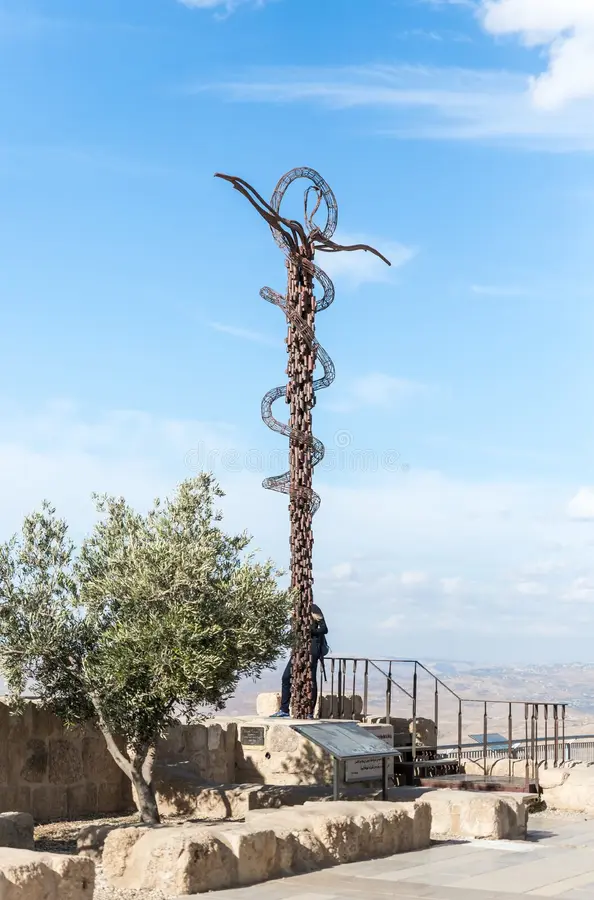
Nebo: Mountain of Seeing
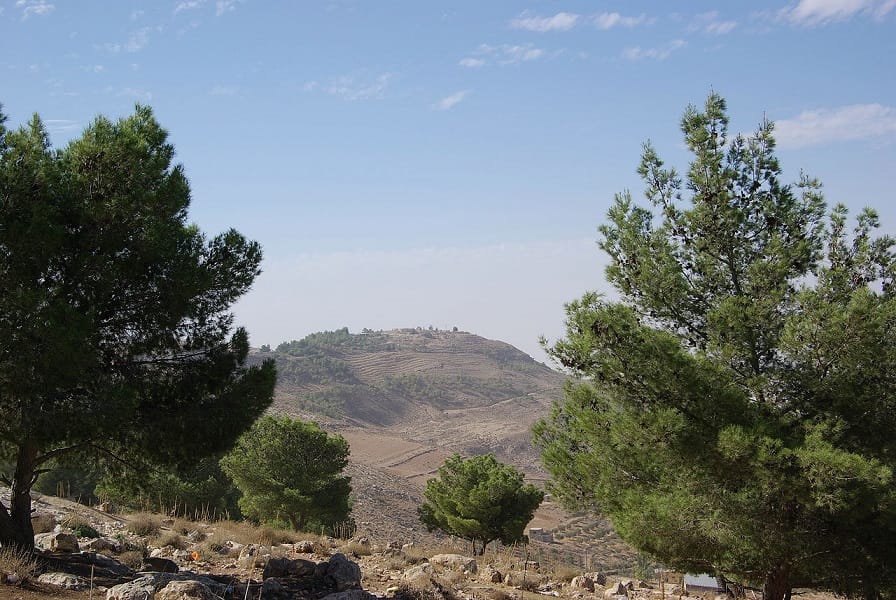
High above the plains of Moab rises Mount Nebo (הַר נְבוֹ) — a place of vision, farewell, and promise. From this summit, Moses beheld the Land he would never enter. To the traveler, it is simply a windswept ridge overlooking the Jordan Valley; but to Israel’s story, it is the meeting point of ending and renewal, where God’s faithfulness outlasts even death.
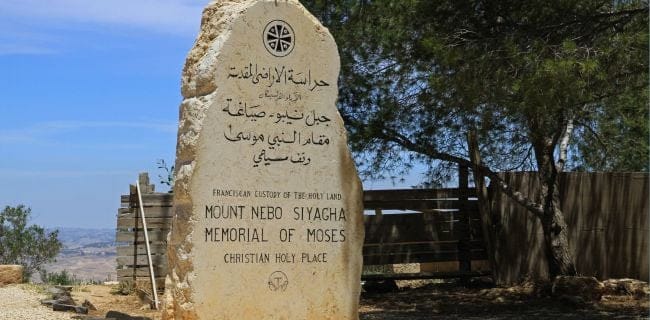
From the windswept ridges east of the Jordan, Mount Nebo (הַר נְבוֹ) rises like a sentinel above the story of Israel. Here, Scripture draws a breath before turning the page.
"Then Moses went up from the plains of Moab to Mount Nebo… and the LORD showed him all the land."
Deuteronomy 34 tells us that Moses, the servant of the LORD, ascended Nebo, looked across the Land, and died there, buried by God Himself.
It is a scene of profound paradox: Moses sees the promise, yet never enters it. But in the Hebrew worldview, to see (רָאָה / ra’ah) is more than sight. It is revelation, perceiving with the eyes of faith what human hands may never grasp.
Then the LORD showed him all the land." (Deut 34:1)
The Hebrew says vayar’ehu Adonai et kol ha’aretz — literally, "the LORD caused him to see." Moses does not climb merely to look; he is shown. On Nebo, vision itself is a divine gift. Faith sometimes ends not in possession, but in perception, the peace of knowing that God’s promise is real, even when it remains beyond our reach.
Between Heaven and Earth
The Torah closes with intimacy, not tragedy: "So Moses the servant of the LORD died there… and He buried him." (Deut 34:5–6)
No other person in Scripture is said to be buried by God. Jewish tradition calls this the neshikat HaShem — the "kiss of God." On Nebo, the separation between heaven and earth narrows to a breath. Death becomes communion.
A Legacy Passed On
Just below Nebo’s summit, Joshua waits. "The spirit of wisdom was upon him, for Moses had laid his hands on him." (Deut 34:9)
The story does not die with the prophet; it descends into the valley and continues in another life. The mountain thus becomes a bridge, from leader to disciple, from vision to fulfillment. Nebo whispers: God’s work is always larger than one generation.
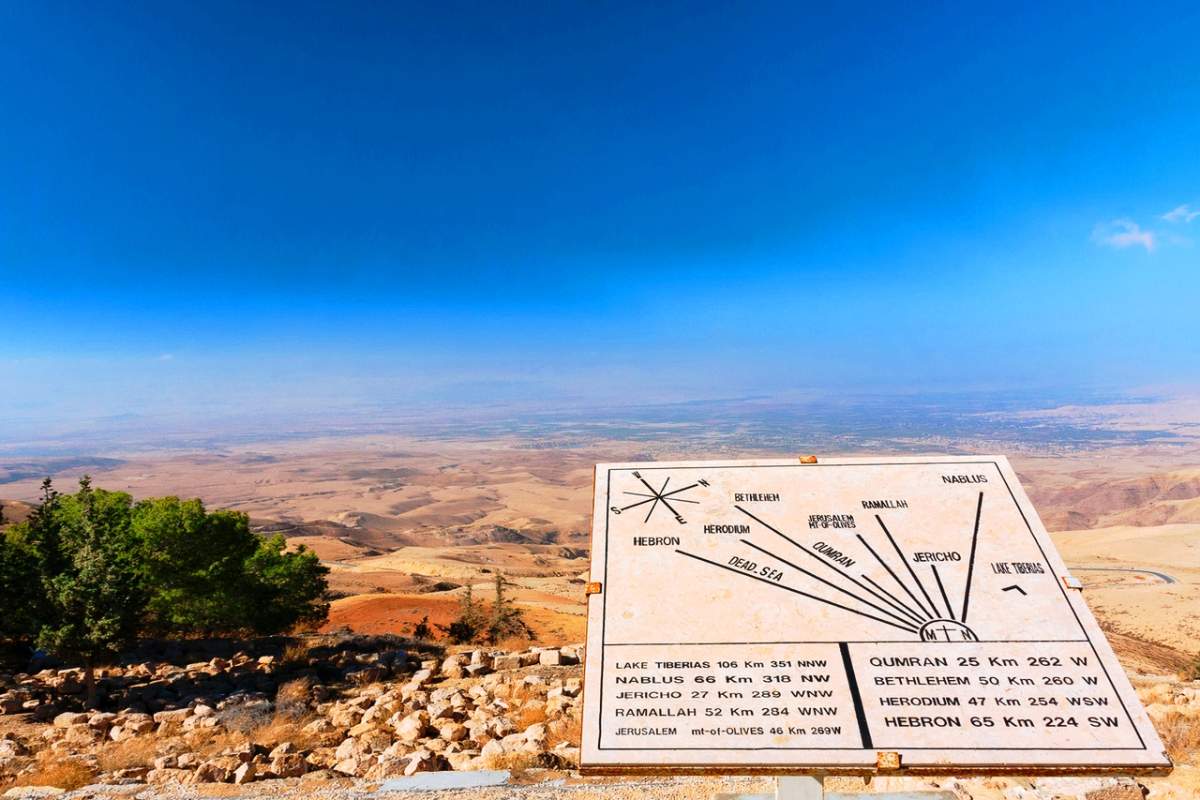
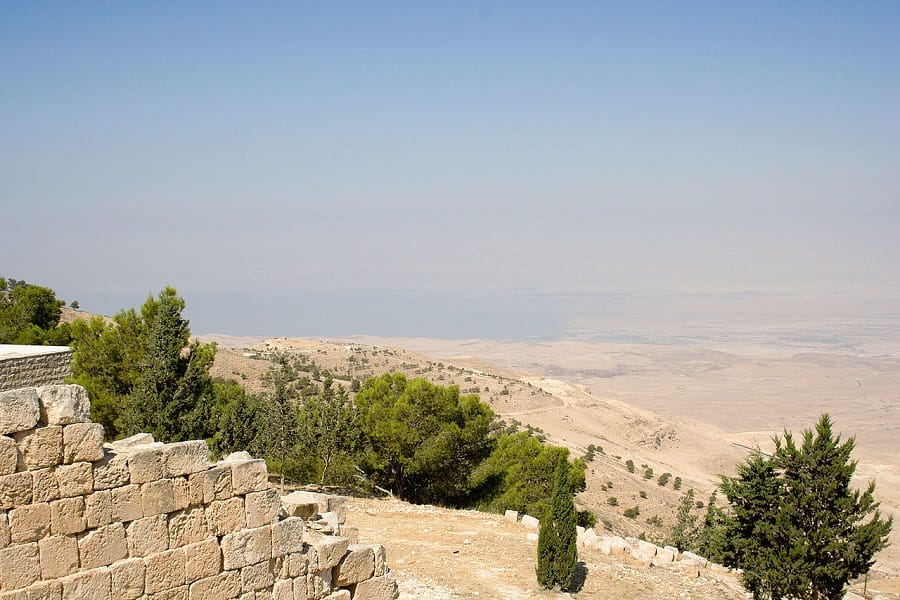
Travelers who stand on Mount Nebo today gaze across the Jordan Valley toward Jericho and the hills of Judah. On clear days, Jerusalem shimmers faintly on the horizon. Early Christian pilgrims built a church on the summit; its mosaics still gleam in the sun. But long before stone walls and inscriptions, the mountain itself was already a sanctuary — an altar of vision.