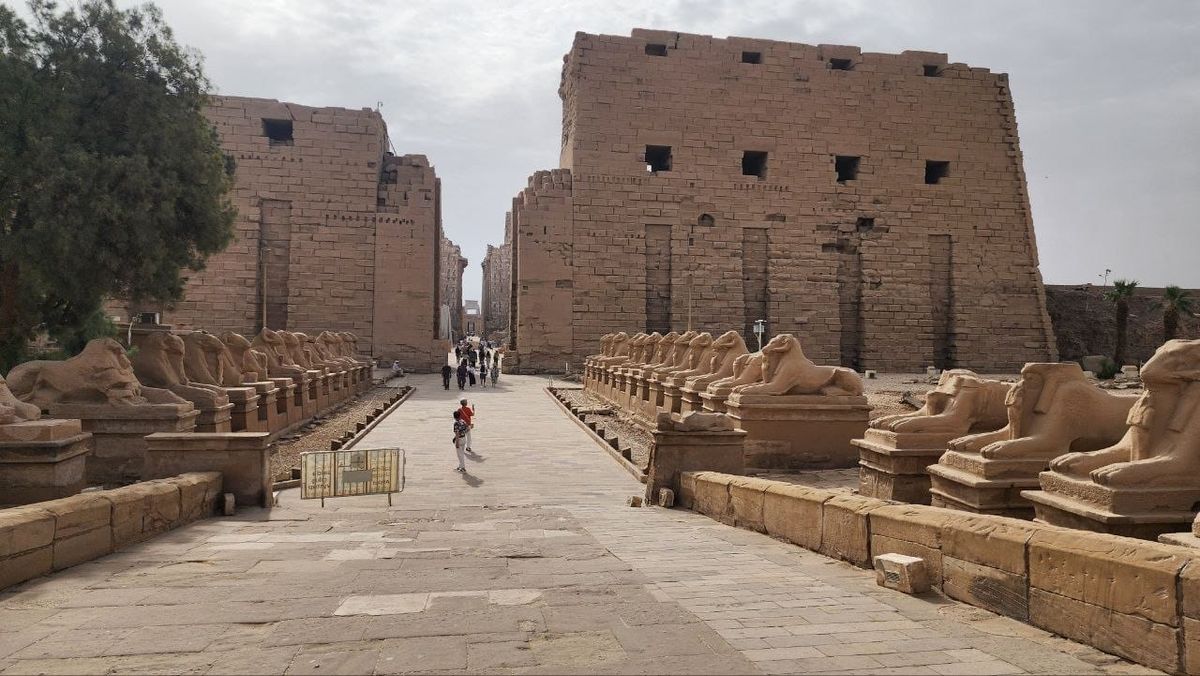
“This month shall be for you the first of the months…” (Ex. 12:2)
In Egypt, every new pharaoh, on the day of his inauguration, would mark the beginning of a new reckoning of time. With each new ruler, a new count began — “in the first year of the king…” This we know from Egyptian records, from Scripture, and from broader historical sources.
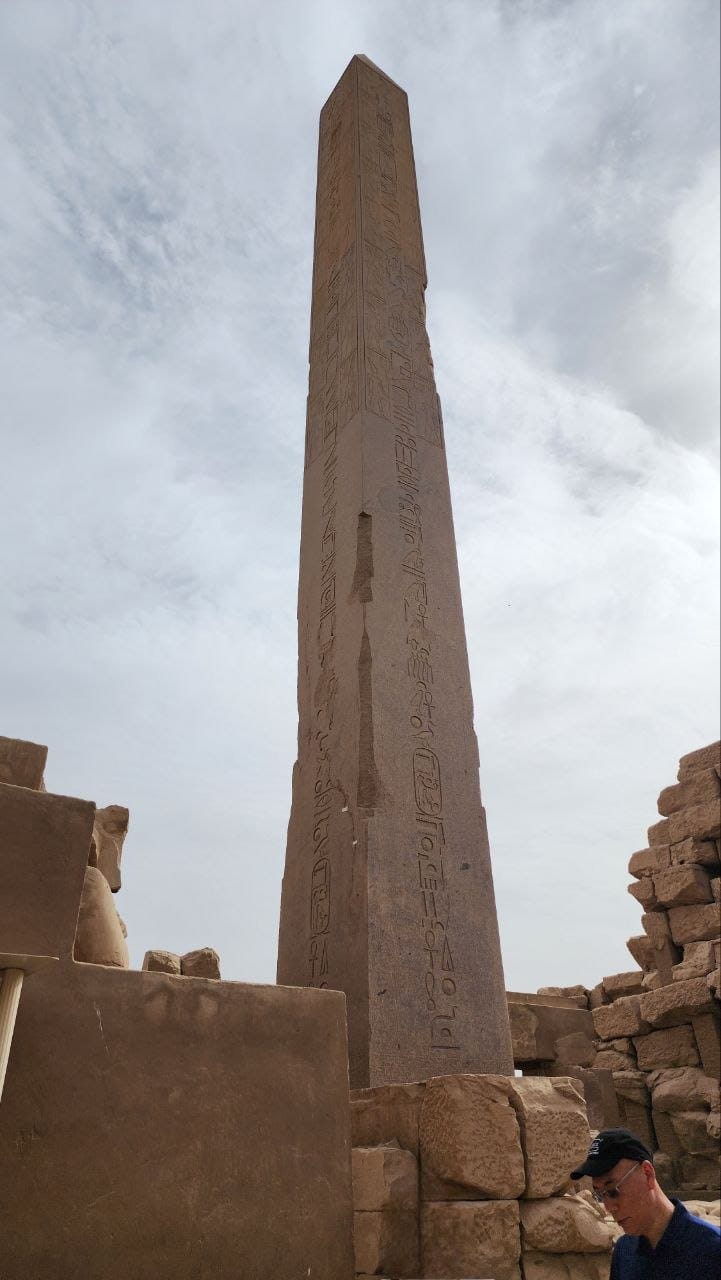
Now, as the 430 years of bondage draw to their close, God Himself announces a new rulership — not of Egypt, but over a nation He is about to bring into being. And with this, He establishes a new calendar.
This beginning does not align with the Egyptian first month, nor with the inherited rhythm of our later Gregorian reckoning. It is a different axis of time — one born out of redemption.
God said to Moses pointing to to the tender crescent of the newborn moon: "This month (חֹדֶשׁ (chodesh) - the new moon as a time period)— for you — is the head of months; first it will be for you of the months of the year" (Ex. 12:2)
In the Torah, the month is called חֹדֶשׁ הָאָבִיב (Chodesh ha-Aviv) — the month of ripening of barley. Only later, in post-exilic texts such as Nehemiah 2:1 and Esther 3:7, does the name Nisan appear — more familiar to the reader, yet rooted in Babylonian terminology.
My own new year was marked by a personal exodus.
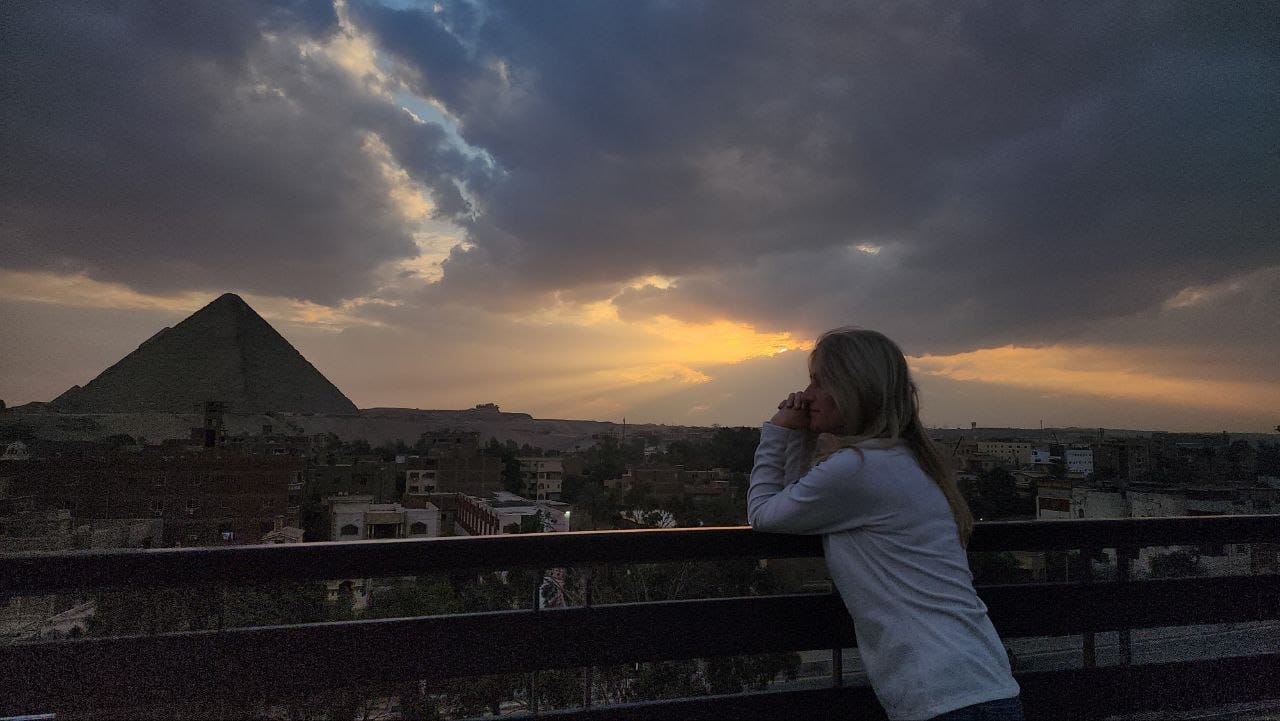
On the tenth day of the first month Aviv or Nissan, I stood — a bird’s-flight distance from the land of Goshen — where the lamb was commanded to be taken into the home and kept until the afternoon of the fourteenth day. Leaven was removed; unleavened dough was prepared in haste.
The Hebrew Pesach (פֶּסַח) (to skip, to pass over, to jump over) received a much deeper meaning for me. It leads me to the root verb used by Isaiah 31:5 פסח (pasach) — to protect, to spare, to hover:
“Like birds hovering, so the Lord of Hosts will protect Jerusalem;
He will protect (פסח), deliver, pass over, and rescue.”
As a bird shields its young under its wings from any danger, so the Lord shields His children from death — by means of His own life – Pesach Lamb.
And so, the voice of John the Baptist resounds with full clarity: Behold, the Lamb of God…” (Jn. 1:29) — echoing the Pesach sacrifice.
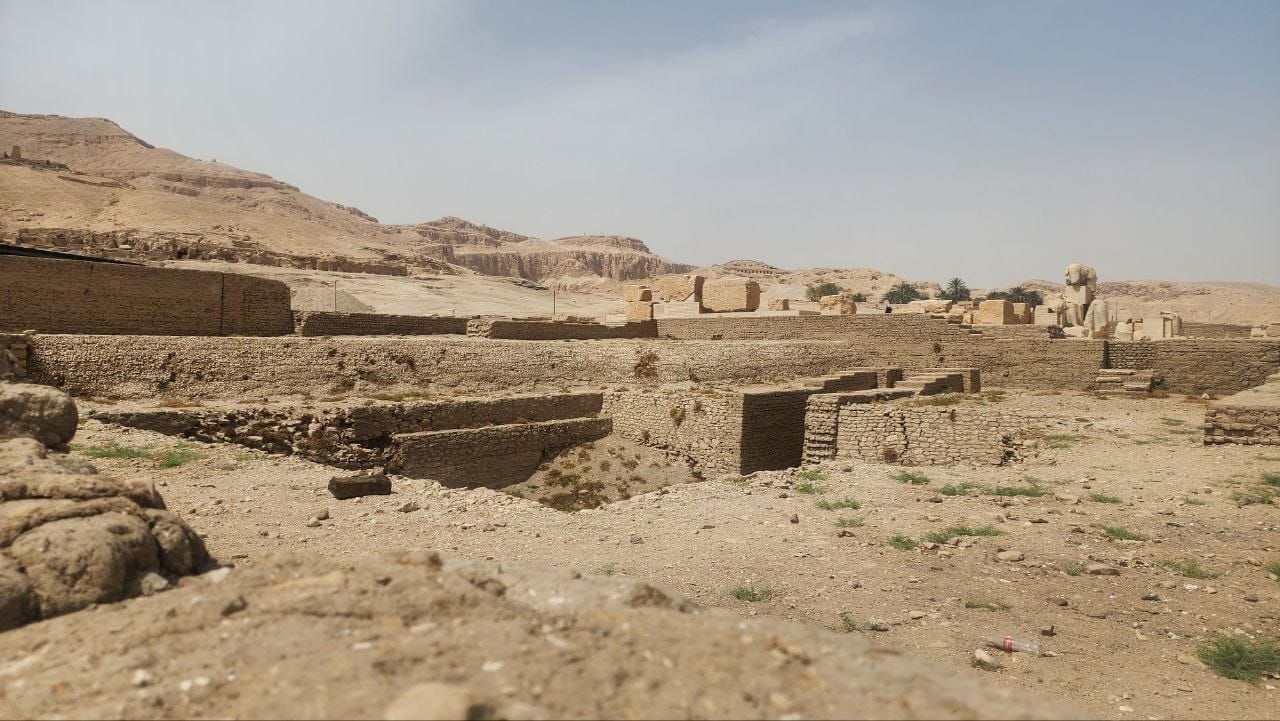
Touching the straw-and-mudbrick walls of the dwellings of the 18th dynasty in Deir el- Medina — I could almost see it: the clay bowl, the hyssop, and a fearful family gathered in the candlelight around a roasted lamb.

Leavened bread (חָמֵץ — chametz) is completely removed; a dough from barley flour, oil, and water is prepared in haste. No time to wait for its rise.
“Clean out thoroughly the old leaven, so that you may be a new batch, just as you are unleavened. For our Passover also has been sacrificed — Christ.” (1 Cor. 5:7)
The yeast produces gas that forms bubbles within the dough, which are held in place by the gluten structure, causing the dough to rise. It is non separatable from the dough. The dough is not free.
And freedom is the essential ingredient of redemption, as we come to understand through the Exodus story. What did Moses — a royal official, raised and bred in the free mentality of the Egyptian court — have in common, apart from his genetic origin, with the slaves labouring under bondage?
Only a free man could lead slaves out; only the mindset of the free could shape the future of freedom.
“Can a blind person lead a blind person? Will not both fall into a pit?” Lk. 6:39
For our Passover also has been sacrificed — Christ.”
It seems like Paul is speaking to a Gentile audience already acquainted with the ordinances of Passover and the seven-day festival of Unleavened Bread.” There is ample archaeological and historical evidence that, for the earliest Gentile believers, the celebration of Passover was an important holiday.
1 Corinthians is a letter addressed to a predominantly Gentile audience who were attending both the synagogue and the weekly gatherings of believers. Additionally, the timing of the letter appears to be an early spring, just before the Passover season. Many portions of the letter allude to Passover and seem to offer instruction on observing it properly, with the right heart attitude: “Your bragging (boasting, pride) is not good. Don’t you know that little leaven leavens all dough?” (1 Cor. 5:6)
Then Paul makes a conclusion with a call: “Let us therefore celebrate the festival” (Greek: ἑορτάζωμεν — present subjunctive active, 1st person plural; a hortatory or volitive subjunctive, urging others to join the speaker in an action already decided — to keep the feast, to celebrate, to hold the festival) “not with the old leaven, the leaven of evil and wickedness, but with the unleavened (bread) of sincerity and truth.” (1 Cor. 5:8)
David Rudolph writes of the widespread practice of Gentiles believers celebrating Passover in the second century:
“It appears that almost all the churches in Asia (where Paul devoted much of his ministry), as well as churches in Asia Minor, Cilicia, Syria, and Mesopotamia, observed Gentile Passover in accordance with the Jewish festival calendar, on the fourteenth day of the first month, the month of Nisan. Far from being a minor schismatic group, Christians who celebrated Gentile Passover on Nisan 14 stretched across a vast geographic region. Many of these Gentile Christians celebrated with Jews, and the similarity of their observance to Jewish Passover probably varied from community to community” (David Rudolph “The Celebration of Passover by Gentile Christians in the Patristic Period,” Verge 2:3 (2010): 4)
When the Roman church sought to limit the celebration of Passover to the first Sunday after Passover, other Christians, especially those in Asia Minor, insisted on celebrating the festival according to the Jewish practice on the fourteenth of Nisan as they had always done. The venerable Bishop Polycarp, a disciple of the Apostle John, insisted that the Torah observance of Passover had been transmitted to them through the apostles.
Although this text is not advocating Passover observance in the Torah sense per se, it does indicate that, at some earlier point, the church was indeed observing the dates of Nissan, indicated in Torah, celebrated by Christ.
This makes full sense:
Gentile believers have been brought near to the commonwealth of Israel. In Christ, they share with the Jewish people one spiritual heritage. Paul tells the Gentiles in Galatia that they are now “sons of Abraham” (Gal. 3:7) — drawing them into the living history of Israel.
And with this, the Exodus is no longer a distant memory.
It becomes their story.
Freedom from Egypt becomes freedom from the bondage of sin.
The lamb is received as the Passover Lamb.
The unleavened bread is taken as His body.
The wine — as His blood.
The date and pattern remain.
The meaning deepens.
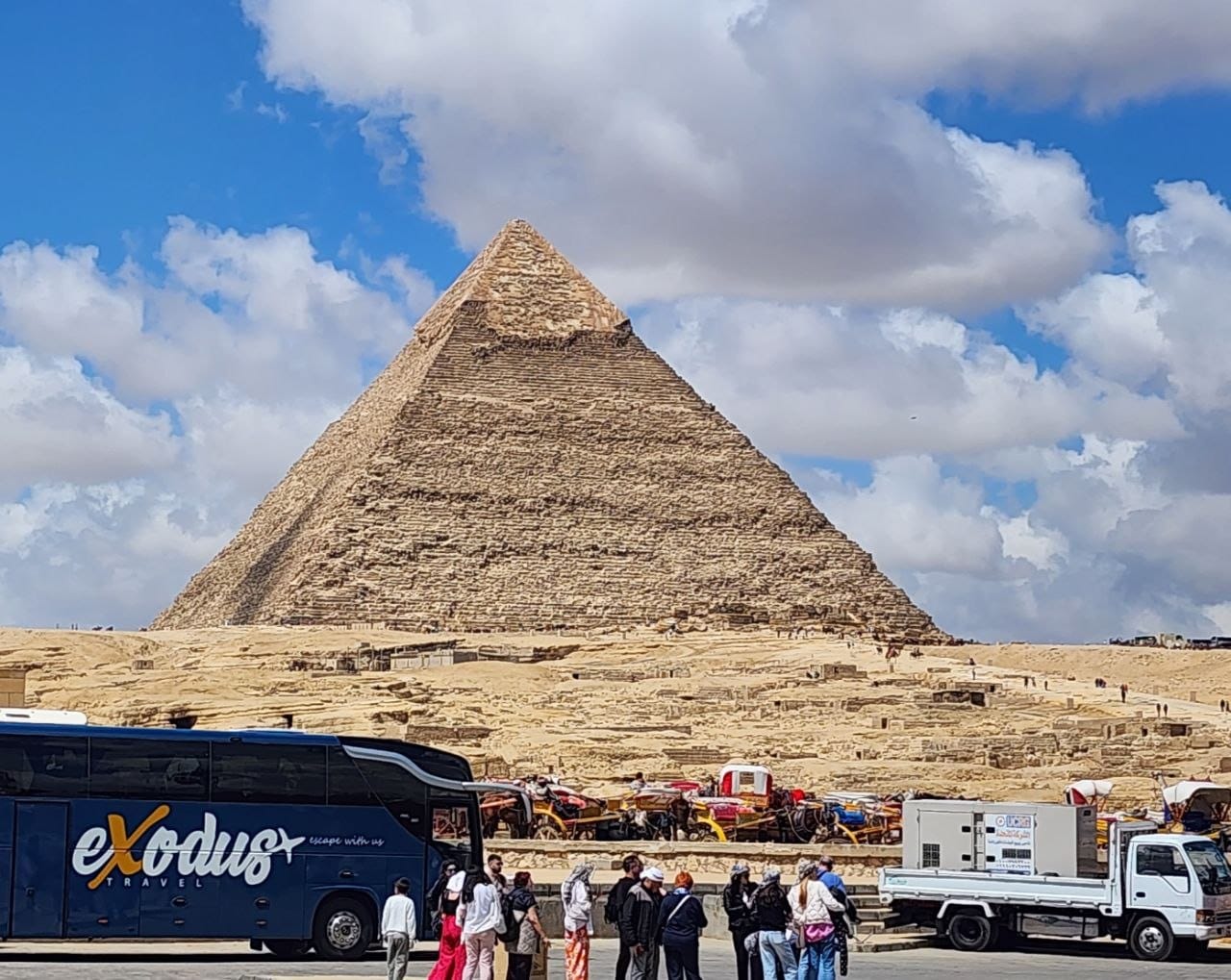
But as for now -
We find ourselves standing between exoduses —
looking back to the one that has been fulfilled,
and forward to the one still to come.
This very tension theologians describe as concept “already but not yet” — expressed in Greek by ἤδη / μήπω.
We long for the greater Exodus,
when deliverance will once again pass over the earth —
when the covering wings of our Saviour will shield פסח (pasach) us from the final plagues.
The same God who brought His people from Egypt and from boundage of sin will deliver them soon intirely from the evil claws of death.
As it is written in Jeremiah:
“Therefore, behold, the days are coming, says the LORD, when it shall no longer be said, ‘As the LORD lives who brought up the children of Israel out of the land of Egypt,’
but, ‘As the LORD lives who brought up the children of Israel from the land of the north and from all the lands where He had driven them.’”
(Jer. 16:14–15)

Member discussion: