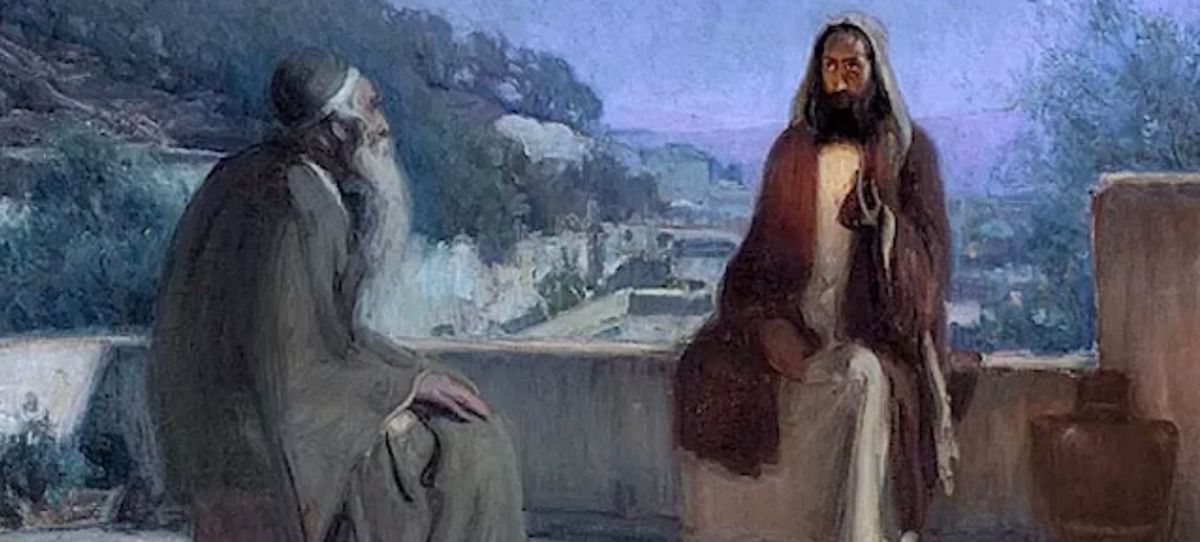
All kinds of people in the Gospels call Jesus Rabbi. Every Gospel uses this title. Even Nicodemus, a leader of Israel, addresses Jesus as Rabbi (John 3:2). What did Jesus do to earn that title? What did it mean to be a rabbi in the first century CE?
The title Rabbi developed over a long period of time. Nobody in the first century had quite the same understanding of the term that we have today. The modern sense of "rabbi" only fully developed after the destruction of the Temple and the completion of the Mishnah. Prior to that, it was a much more general title.
Rabbi comes from the Hebrew word רַב (rav), meaning "great," "much," or "abundant." Thus, רַבִּי (rabbi) literally means "my great one" or, in Aramaic usage, "my master." It describes someone who has much to give, much wisdom to share, and an abundance of teaching. It is an honorary title that acknowledges a position of respect and authority. That is precisely why Christ stressed the equality of His disciples and instructed them not to elevate one another above the rest – do not be called Master. (Matthew 23:8).
Among disciples, the most capable students would gradually move closer to the teacher, symbolically representing greater responsibility over the other students. After completing their training, many would themselves become teachers.
A rabbi is someone thoroughly trained in the Torah—someone educated, able to explain the Scriptures clearly, connect passages together, interpret them within Israel's history, and make difficult ideas understandable. A rabbi knew how to reason through the biblical text, using the traditional interpretation methods.
There were, of course, many other teachers—teachers of halakhah, scribes, Pharisees, and synagogue instructors.
A rabbi, by the way, did not run the synagogue. The synagogue belonged to the local community. The ἀρχισυνάγωγος (archisynagōgos), used in NT was the ruler or administrator of the synagogue, rather than the rabbi himself.
A rabbi was not a priest but usually a layman. The priests were appointed to serve in the Temple and instruct Israel there. Yet after the Babylonian exile, when many Jews lived far from Jerusalem without access to the Temple, Jewish worship gradually became increasingly centred on the study of Scripture. Before the exile, worship revolved primarily around sacrifice. Afterwards, a new class of teachers emerged - men who mastered the sacred text, explained it, interpreted it, and taught it. This is where the idea of the rabbi truly began to take shape.
The title continued to develop over the following centuries. We possess archeological inscriptions using the title Rabbi, particularly around Jaffa (Joppa), dating from the late first and early second centuries. A rabbi was simply understood as someone of substance, someone who had much to offer.
Interestingly, the earliest extensive literary witness to the title Rabbi is the New Testament itself. It preserves the earliest sustained picture of what such a teacher actually looked like.
Jesus becomes the model of a rabbi. He was a teacher of God's Law and divine wisdom among other Jewish teachers of His day. In many respects, He taught in ways similar to His contemporaries.
Ancient rabbis normally taught while sitting. Their disciples sat at their feet. Teaching was unhurried. There was no rush; what mattered was receiving wisdom from the lips of the teacher.
"Let thy house be the meeting place of the wise; cover thyself with the dust of their feet, and drink in their words with thirst." (Mishnah, Pirkei Avot 1:4)
This is exactly the behaviour we see in the New Testament.
Lk 10:38–39 παρακαθεσθεῖσα πρὸς τοὺς πόδας τοῦ Κυρίου - "having seated herself at the Lord's feet".
Mary is not simply sitting on the floor; she is taking the recognized position of a תלמיד (talmid), a disciple, at the feet of her Rabbi, listening attentively to His teaching. Studying at the feet of a rabbi was the privilege of the best and brightest students. The closer you sat, the closer your relationship with the teacher.
Official disciples normally supported rabbi through tuition or other forms of financial assistance. The more famous the rabbi, the greater the cost of studying with him.
It is remarkable that Jesus never demanded tuition fees. Yet He repeatedly spoke about the true great cost of becoming His disciple.
There were also different circles of disciples, each with different levels of commitment. Around Jesus we see the crowds, then the five hundred, then the seventy, then the Twelve, and finally the inner circle of three.
Among His closest followers were women who supported His ministry financially, assisted with practical needs, and enjoyed personal lessons. As surprising as it may sound today, women in that period also listened to Torah teaching and, at times, even corrected their husbands in matters of Scripture.
When visiting ancient synagogues, people often ask whether men and women sat separately. Modern synagogues frequently include women's galleries or balconies, especially in larger communities.
However, careful studies by scholars such as Shmuel and Hannah Safrai, based on the earliest literary and archaeological evidence, suggest that the earliest synagogues did not have permanent women's balconies or fixed divisions within the prayer hall. These developed later.
Once again, we see how easily modern practices can be read back into the New Testament world.
The ancient world was primarily an oral culture rather than a visual one. Information lived in the memory. From childhood people trained themselves to memorize long speeches, biblical passages, and entire tractates. Disciples memorised their teacher's words with astonishing accuracy. They constantly repeated the teachings to one another so that every word could be checked over and over and rendered precisely.
When people speak of the Oral Torah, this process of faithful transmission is exactly what they have in mind.
An interesting fact, that Jesus follows the manners of contemporary teachers: In Mat. 5:1–2 Jesus sits down before delivering the most famous Sermon on the Mount.
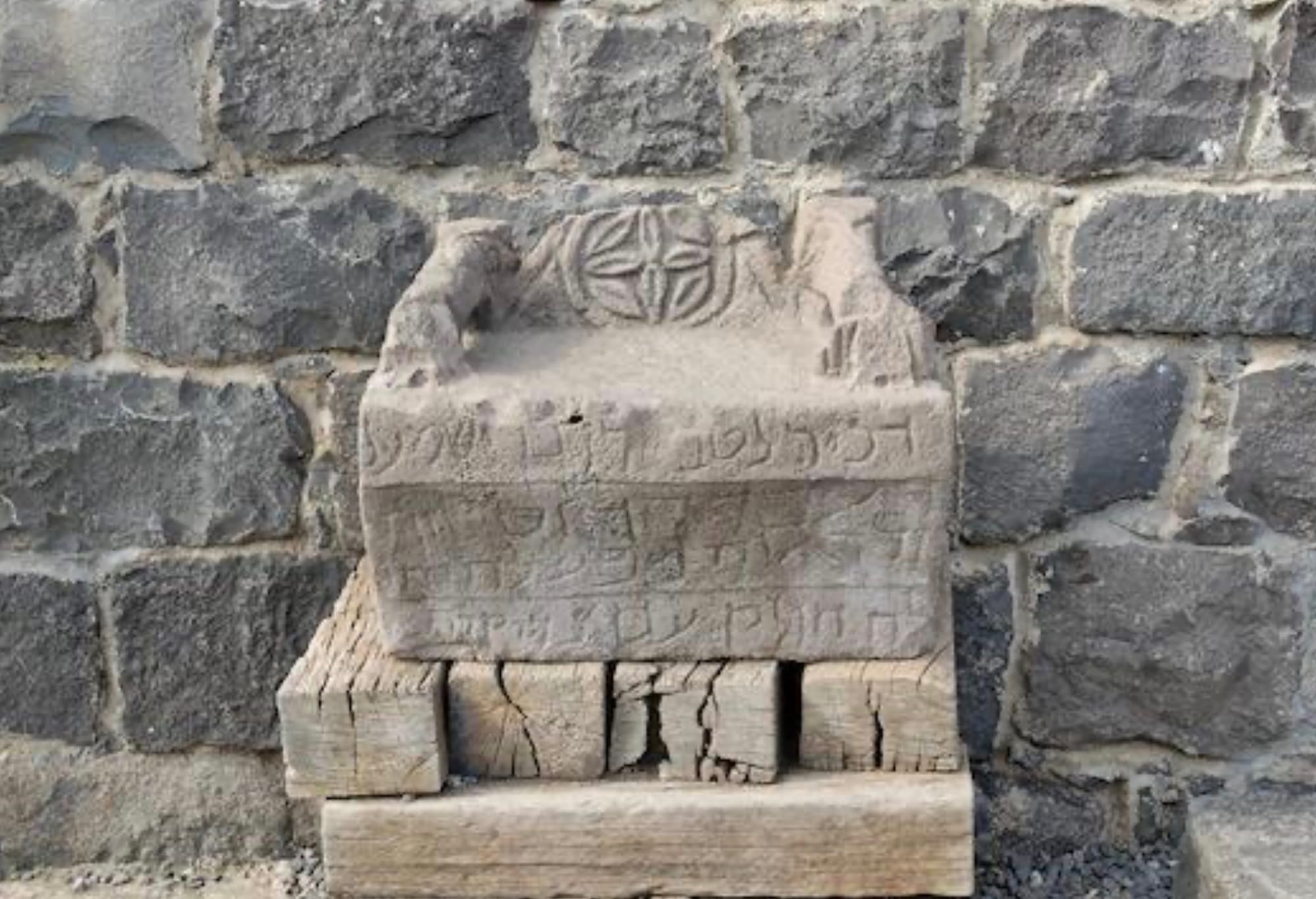
The famous Seat of Moses was discovered in the synagogue at Chorazin, dating from the fourth century CE. As far as we can tell, it was the seat from which the Scriptures of Moses were publicly taught. Jesus acknowledges the scribes and Pharisees as legitimate teachers of Moses' Law, saying that the people should observe what they teach, but not imitate their behaviour.
Mat 23:2–3 “… scribes and the Pharisees sit in Moses' seat: all therefore whatsoever they bid you observe, that observe and do; but do not ye after their works: for they say, and do not.”
For me and you still invitation for discipleship of the greatest Rabbi of all centuries is open today: "Follow Me."
To be covered in the dust of His feet.
To listen with the eagerness of His teaching.
To allow His Word to shape our minds, our hearts, and our lives.

Member discussion: