In Deuteronomy 30, Moses stands before Israel on the 7th of Adar, the last day of his life. For forty years he has been their faithful teacher and prophet. And now, on the day of his departure, he speaks words they are meant to hold onto for the rest of their lives—and pass from generation to generation.
They are, perhaps, among the most important words ever spoken about the human choice.
Moses places before Israel two possibilities: to cling to the Almighty and live a life of blessing, or to choose neglect and forgetfulness, slowly moving away from the Source of Life. And such a path will have consequences. Distance from God will eventually become distance from the Land. Blessing will give way to calamity, and Israel will once again find itself in exile.
אִם־יִהְיֶה נִדַּחֲךָ בִּקְצֵה הַשָּׁמָיִם מִשָּׁם יְקַבֶּצְךָ ה׳ אֱלֹהֶיךָ וּמִשָּׁם יִקָּחֶךָ׃
“Even if your scattered ones are at the end of the heavens, from there the LORD your God will gather you, and from there He will take you.”
Deut. 30:4
Even from there.
Adonai Elohim—the God of mercy and judgment—will bring them back after wholehearted repentance.
The hardships and thorns will become part of the guiding mechanism to point the way Home.
Then Moses says something we have to stop to understand:
כִּי הַמִּצְוָה הַזֹּאת אֲשֶׁר אָנֹכִי מְצַוְּךָ הַיּוֹם לֹא־נִפְלֵאת הִוא מִמְּךָ וְלֹא רְחֹקָה הִוא׃
“For this commandment which I command you today is not too difficult for you, nor is it far away.”
Deut. 30:11
Which commandment specifically is he speaking about? What is not far away? Is he speaking about the whole Torah? The context gives us the answer.
When Moses speaks about the Torah as a whole, he often uses the expression כָּל הַמִּצְוָה — kol ha-mitzvah, “the whole commandment.”
But here he says:
הַמִּצְוָה הַזֹּאת — ha-mitzvah ha-zot — “this commandment
Which one?
A few verses back, he speaks several times about תְּשׁוּבָה, teshuvah, repentance:
“and you shall bring it back to your heart” (30:1),
“and you shall return to the LORD your God” (30:2).
Context makes it clear: “this commandment” is the commandment of teshuvah — the return to God.
And Moses wants Israel to register this deeply: even if their sins scatter them to the very ends of heaven, return is still possible. The Heavenly Father is still waiting for you.
Just a few verses earlier, Moses gives us another interesting aspect:
הַנִּסְתָּרֹת לַיהוָה אֱלֹהֵינוּ וְהַנִּגְלֹת לָנוּ וּלְבָנֵינוּ עַד־עוֹלָם לַעֲשׂוֹת אֶת־כָּל־דִּבְרֵי הַתּוֹרָה הַזֹּאת׃
“The hidden things belong to the LORD our God, but the revealed things belong to us and to our children forever, that we may do all the words of this Torah.”
Deut. 29:28
In its immediate context, הַנִּסְתָּרֹת — ha-nistarot, “the hidden things,” refers first of all to hidden human sins. Israel cannot carry responsibility for what no human eye can see. The hidden belongs to God—He sees the heart.
But הַנִּגְלֹת — ha-niglot, “the revealed things,” belong “to us and to our children.” What God has brought into the light becomes our responsibility—collective responsibility—la'asot, to do — לַעֲשׂוֹת.
Now I want to come to the point I was writing this article for, Moses’ statement in the same chapter:
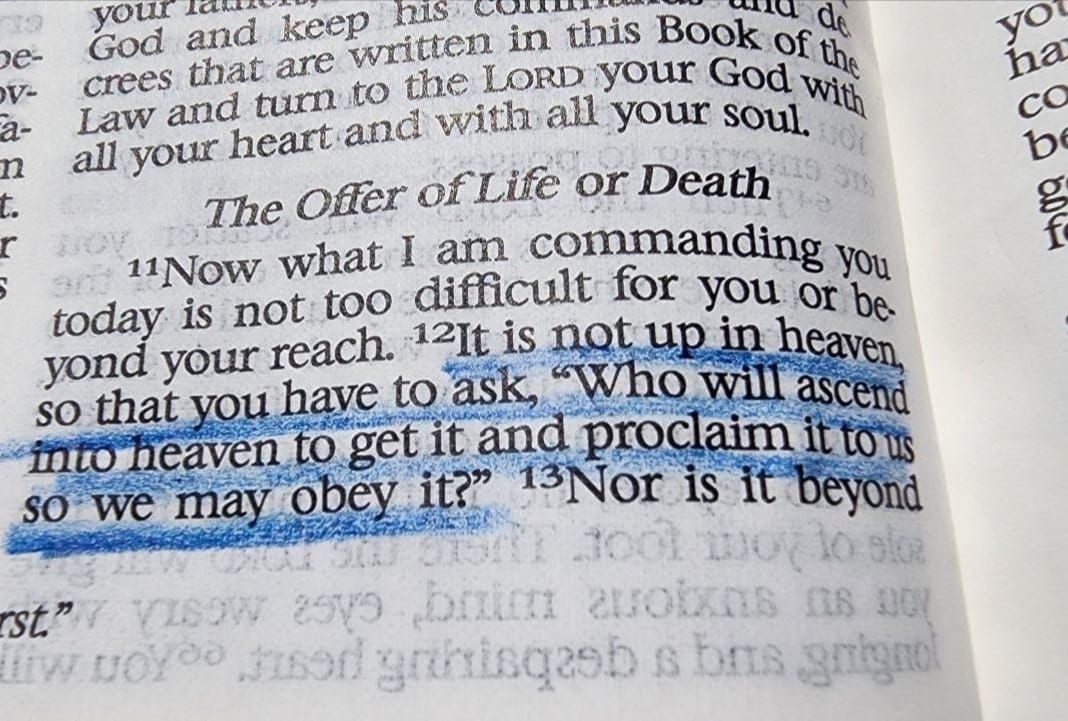
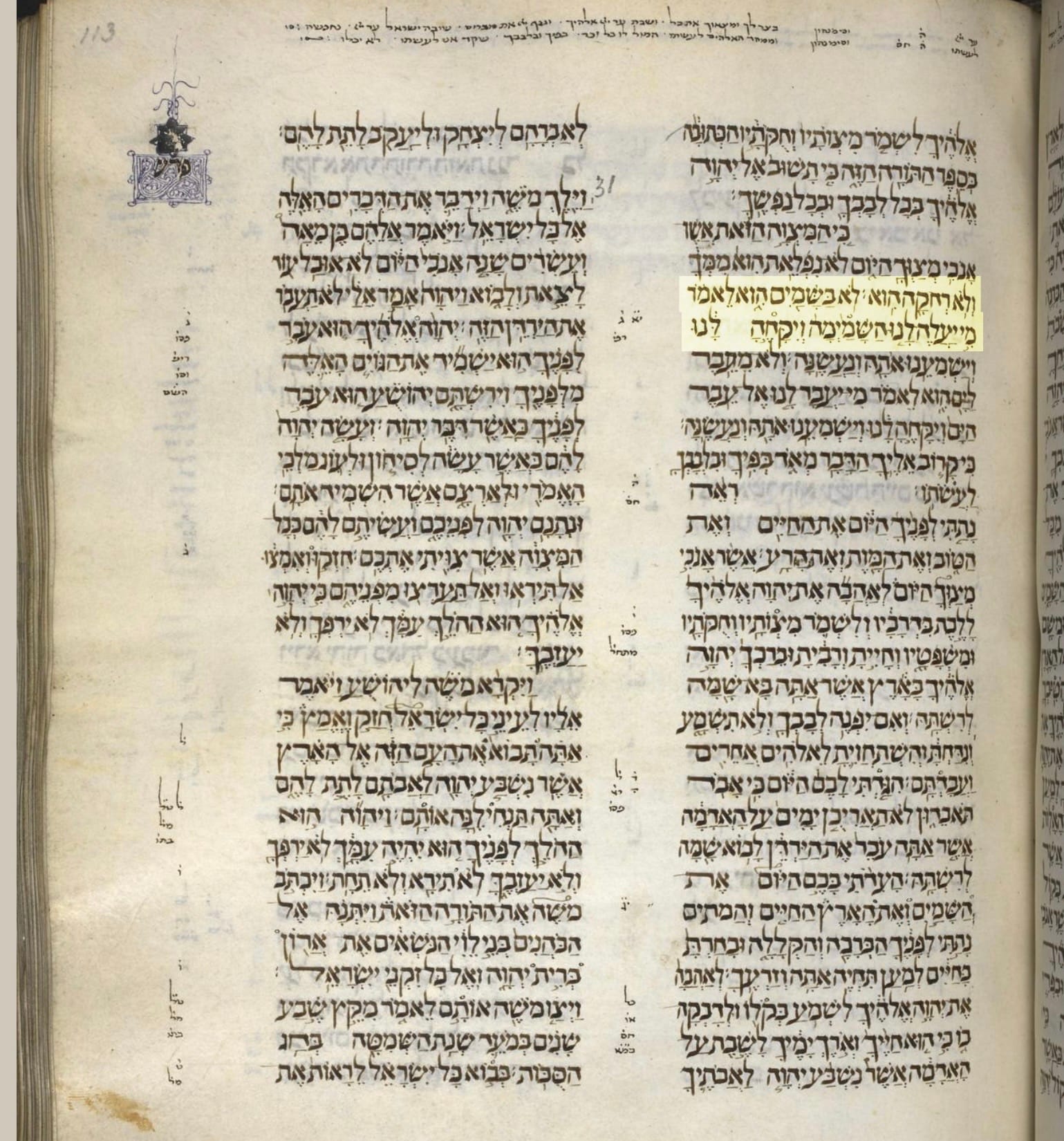
לֹא בַשָּׁמַיִם הִוא לֵאמֹר מִי יַעֲלֶה־לָּנוּ הַשָּׁמַיְמָה וְיִקָּחֶהָ לָּנוּ וְיַשְׁמִעֵנוּ אֹתָהּ וְנַעֲשֶׂנָּה׃
“It is not in heaven, that you should say, ‘Who will ascend to heaven for us and bring it to us, that we may hear it and do it?’”
Deut. 30:12
And neither is it somewhere beyond the sea:
וְלֹא־מֵעֵבֶר לַיָּם הִוא לֵאמֹר מִי יַעֲבָר־לָנוּ אֶל־עֵבֶר הַיָּם וְיִקָּחֶהָ לָּנוּ וְיַשְׁמִעֵנוּ אֹתָהּ וְנַעֲשֶׂנָּה׃
“Nor is it beyond the sea, that you should say, ‘Who will cross the sea for us and bring it to us, that we may hear it and do it?’”
Deut. 30:13
Torah, repentance, the study of Scripture—all available for you. You do not need to fly into space to discover some new truth about Him. You do not need to cross an ocean or join a scientific expedition to bask in His revelation.
For us today, His words are closer than ever before in human history. They are on the phones we carry everywhere—in thousands of translations, dictionaries and commentaries.
The Torah was given around 3,300 years ago, and 2,000 years ago, Yeshua the Messiah brought its Words into even brighter light—and today they remain right here before us, as close and accessible as ever.
The problem is not distance.
כִּי־קָרוֹב אֵלֶיךָ הַדָּבָר מְאֹד בְּפִיךָ וּבִלְבָבְךָ לַעֲשֹׂתוֹ׃
“For the word is very near you, in your mouth and in your heart, that you may do it.”
Deut. 30:14
How near? In your mouth and in your heart. God brought it so close.
If Torah were in heaven, you should make extraordinary efforts to reach it and learn it. But the Word Himself came down to you. If the Word were across the sea, in Israel, you should fly over and meet Him. But He is not distant. He is present—right here with you, in your heart.
The choice is yours.
The action is in your hands: that you may do it.
Choose life.
He is available.

Member discussion: