
Imagine the scene with me.
Forty years have passed. Moses is standing on the plains of Moab. Before him is a new generation. They did not build the pyramids of Egypt, they know nothing of slavery, only from the parents' stories. They were born in the wilderness. Ahead of them lies Canaan—the land their parents and grandparents spoke about for decades. In only a few days they will cross the Jordan.
One might expect Moses to begin speaking about military strategy, the division of the land, or the political structure of the future nation.
Instead, he begins somewhere entirely different.
He begins with the human heart.
The passage I do refer is in the Deut. 7:12–11:25. In Hebrew Bible it has the name
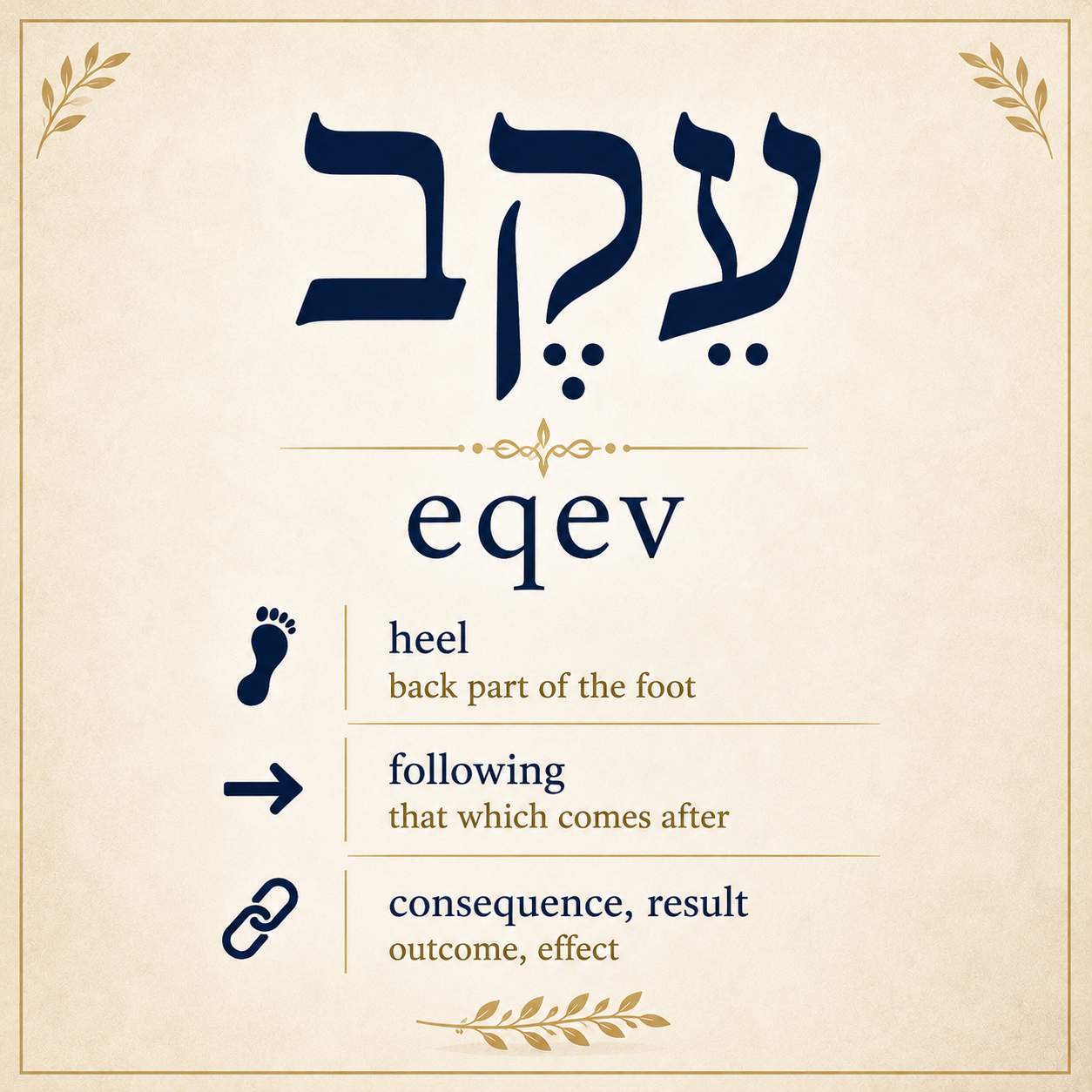
עֵקֶב (ʿEqev)
This passage has always fascinated me. It is not about how to enter the Promised Land, but about how not to lose God once you are living in it.
The Hebrew word literally means "heel." It comes from the root ע־ק־ב (ʿ-q-b), "to follow behind," "to come after," "to overtake," or "to come as a consequence." From the same root comes the name יַעֲקֹב Yaʿaqov – Jacob, the one who grasped his brother's heel at birth. Throughout the Bible it develops the meaning of "because," "as a consequence," "as the result of." So the name of the passage carry the meaning if you faithfully obey the words of the Almighty, His blessings will follow, like the heel follows every step.
There is another aspect to it:
‘Eqev also hints at those commandments that people tend to trample "under their heel," considering them too small to matter. Israel's greatest spiritual failures didn’t began with rejecting the entire Torah. They began by neglecting what seemed insignificant. The same in our generation.
As I continue reading the parashah, I notice so much more directly related to myself:
The passage central character is not Israel. The central theme is memory.
Again and again Moses repeats:
"Remember Egypt. Remember the wilderness. Remember the manna. Remember who gave you the strength to acquire wealth."
In biblical Hebrew, remembering is not an intellectual exercise. The verb זָכַר (zakhar) means far more than recalling information. It means to remember in such a way that one's actions become shaped by that memory. Likewise, its opposite, שָׁכַח (shakhaḥ), "to forget," does not simply describe a lapse of memory. It means to live as though God had never acted.
That is why forgetfulness becomes one of the Bible's greatest spiritual dangers.
It matters to me today. My acting today is shaped by my intimate experience with Him in my past. I am building on that foundation every day to have that type of memory Moses is talking about.
On my morning prayer walk, as I looked at the crashing waves of the Indian Ocean, I asked myself, What are you most afraid of in your life?
Searching deep within for an answer, my second self unexpectedly replied:
"God-forgetfulness"—not in the sense of forgetting God, but the fear that God might distance Himself from me for the reason I don’t comprehend.
Addition to that conversation with myself came to me the same afternoon, when I opened weekly Torah portion.
Moses repeatedly says, "Do not forget God."
Isaiah presents Zion crying, "The Lord has forsaken me; the Lord has forgotten me." (Is. 49:14)
The people fear that God has forgotten them.
"Can a woman forget her nursing child?... Even these may forget, yet I will not forget you." (Is. 49:15)
The Hebrew verb is שָׁכַח (shakhaḥ) appears on both sides. The entire covenant is a relationship built upon mutual remembrance. Human memory may fail. God's memory never does.
Next point of the weekly portion is the account of the manna.
Many readers assume that the manna was simply God's miraculous food supply.
The Text says something much deeper. God certainly had countless ways to feed Israel. The manna was never just about nourishment. It was a school of trust, lesson every day.
Yesterday's manna could not sustain today's journey. Faith could not be stored like grain. That explains Moses' famous declaration:
"Man shall not live by bread alone, but by everything that proceeds from the mouth of the Lord." (Deut 8:3)
Notice carefully what Moses does not say. He does not oppose bread to God's word, as many preachers explain. He teaches that even bread exists only because God's word first called it into existence. The physical world is never independent from the spiritual, its sustained by it.
Isaiah develops precisely the same idea, but from another direction. He invites us to look at Abraham.
Why Abraham?
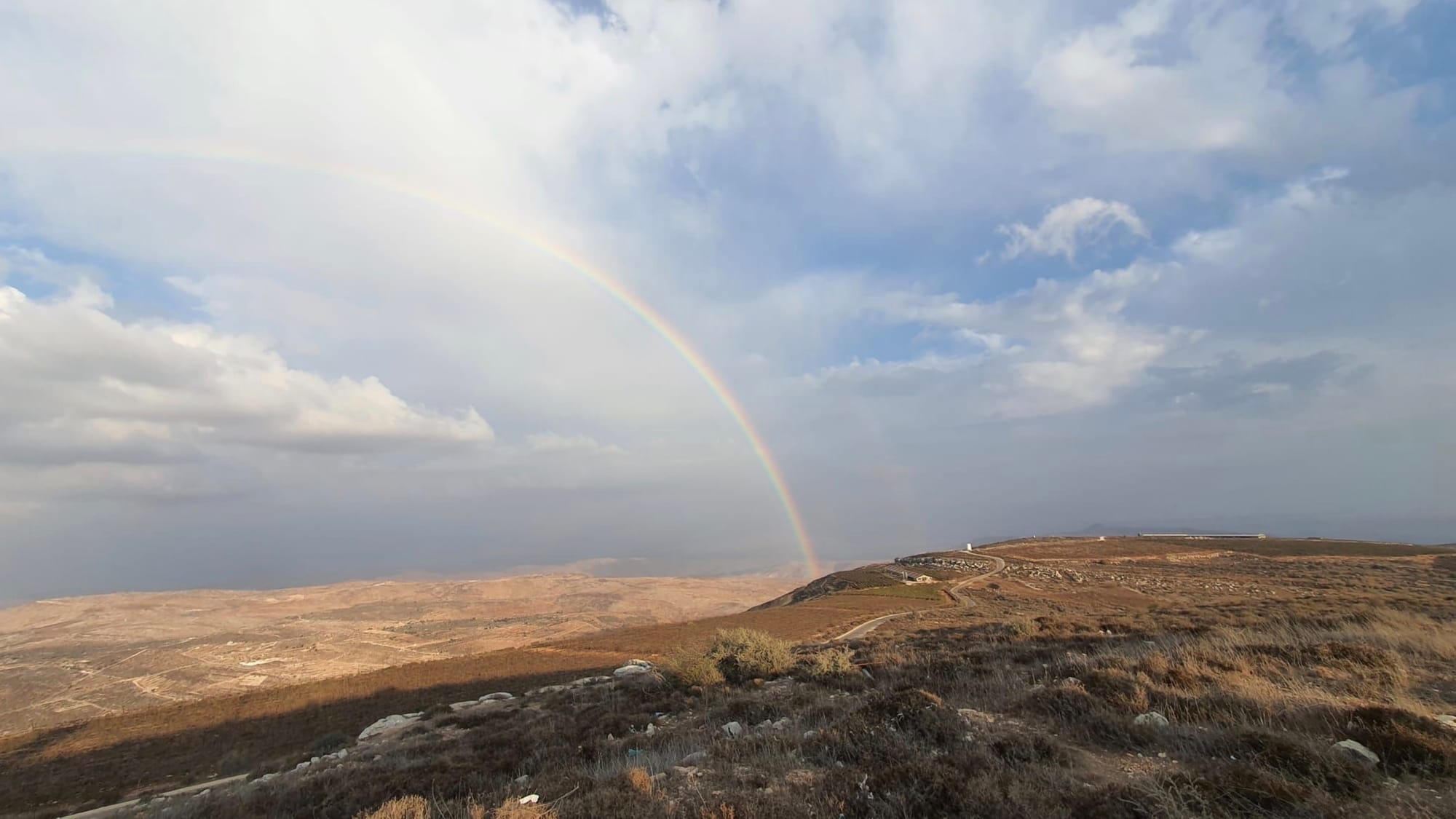
Because Abraham learned to trust before he saw fulfilment. He was promised the whole Land, he could see from the high hills of Samaria, but never had anything, except a overpriced plot for burial. You could take it as a joke, but not Abraham. He was promised a multimillion nation, but being 137 years of old he found himself on the brink of killing one and only legitimate son.
Living some thirty-seven centuries after Abraham, we have witnessed the establishment of the independent State of Israel in 1948. Today, it is home to more than 10 million people, while millions more Jews live beyond its borders across the world.
What can I say as a conclusion?
The passage is teaching us that faith is not sustained by extraordinary moments, but by a heart that remembers. We may sometimes fear that God has forgotten us, yet the covenant rests on a far greater certainty: His memory.
And if His faithfulness to Abraham has pursued his descendants for nearly four millennia, it will surely follow us as a heel (‘Eqev) too.

Member discussion: