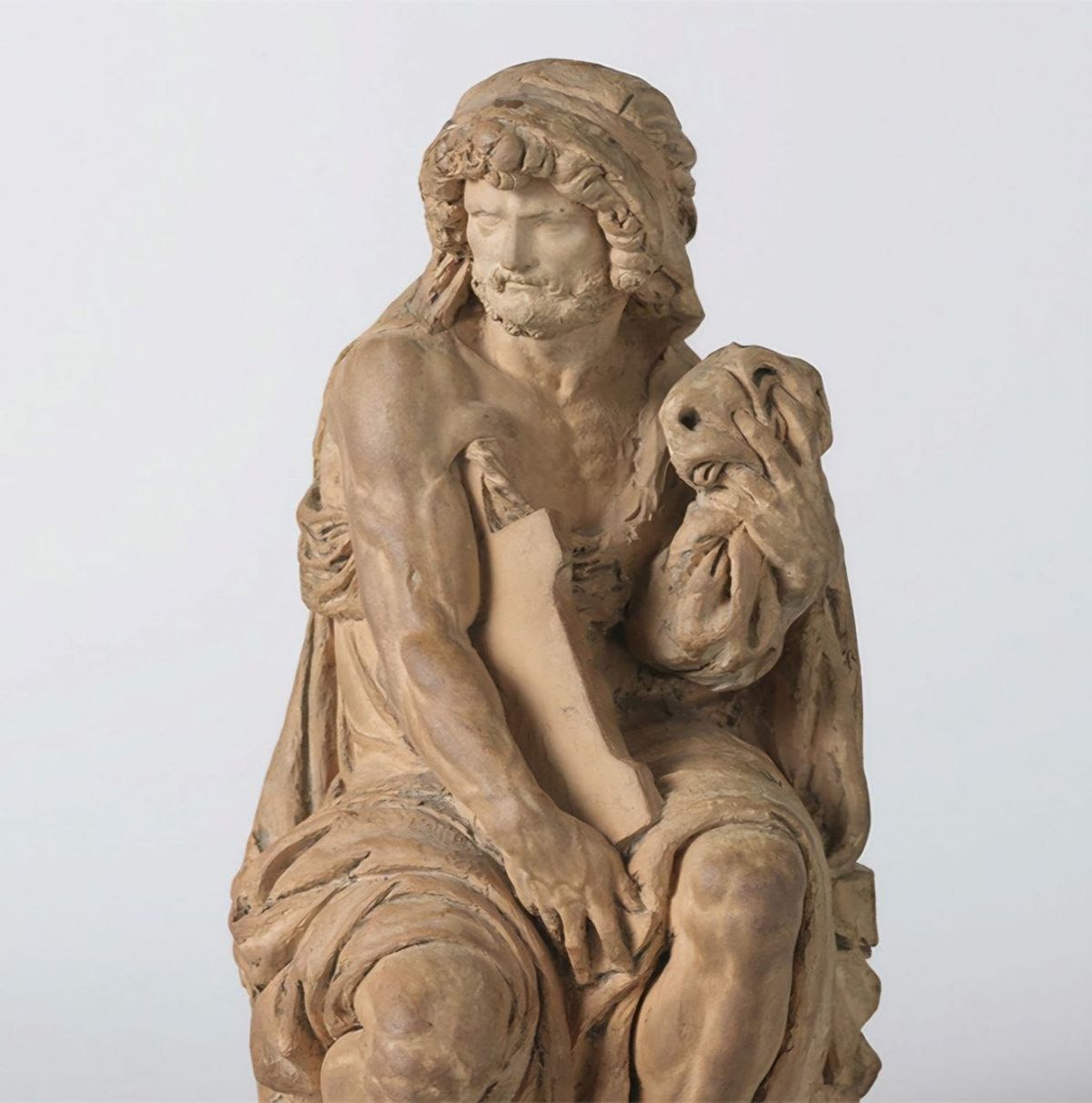
Today I would like to tell you something about Balaam.
How much do you really know about him?
His story occupies chapters 22–25 in the Book of Numbers and is one of the most remarkable narratives in the entire Torah.
Balaam is unique. He is the only non-Israelite prophet in the Tanakh whose prophecies are recorded in such detail. You may ask: was he truly a prophet?
The answer is yes—very much so. Not merely a fortune-teller or pagan diviner, but a man to whom the God of Israel revealed Himself and through whom He spoke.
What makes this even more fascinating is that Balaam is one of the very few biblical figures who also appears in an archaeological source outside the Bible.
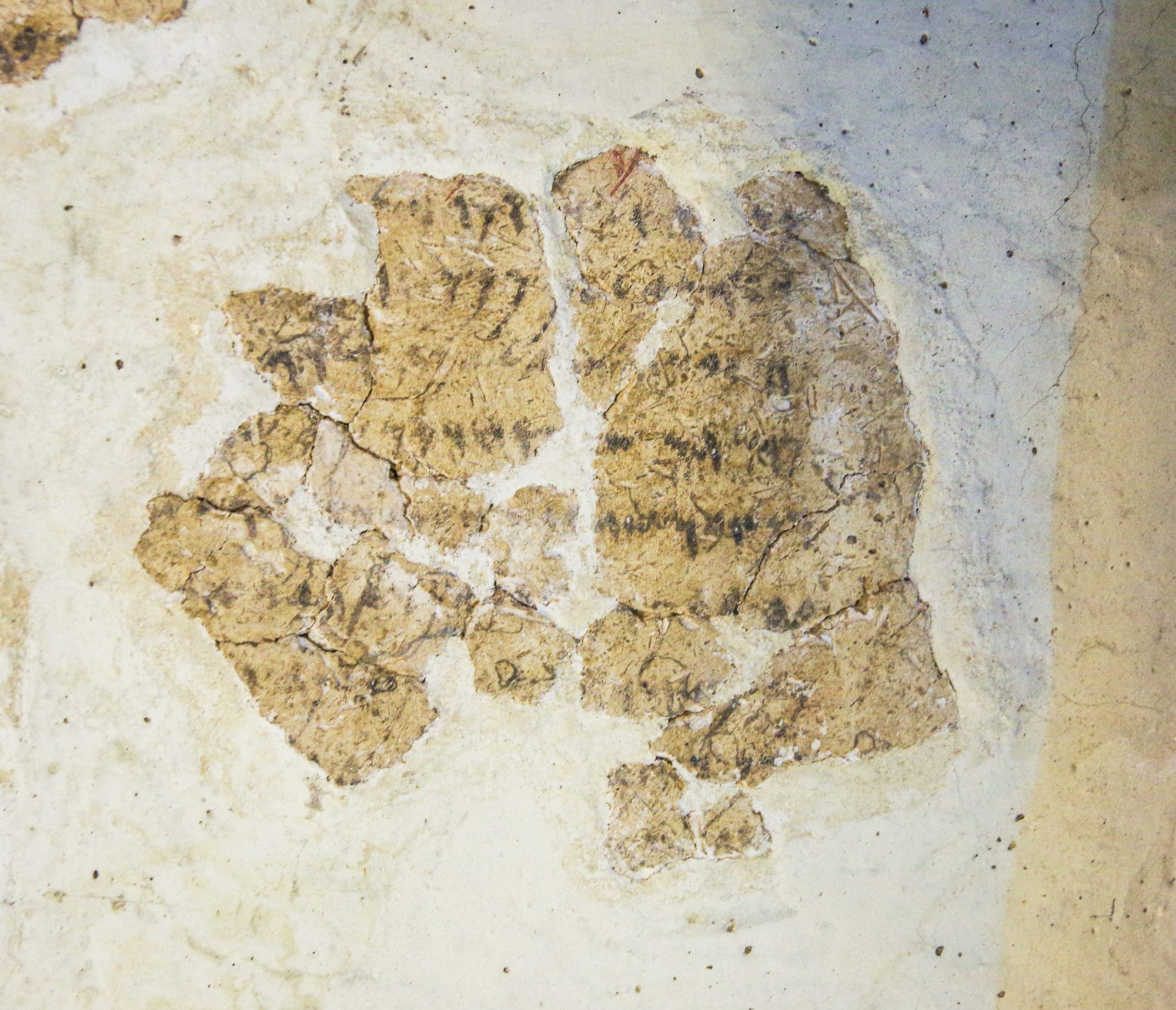
In 1967, archaeologists excavating at Deir Alla in Jordan discovered a plaster inscription dating to approximately the 8th century BC. The text refers to:
“Balaam son of Beor, a seer of the gods.”
This is extraordinary. The inscription is not a Jewish or biblical document. It comes from a completely different cultural setting, yet it preserves the memory of a prophet named Balaam, son of Beor, centuries after the events described in Scripture. Few biblical personalities can claim such a remarkable confirmation outside the biblical record.
Yet Balaam is famous for something else.
He is remembered as a villain.
How can that be?
How can a man receive revelations from the Most High and yet become a moral scoundrel?
Israel approaches the Promised Land from the east. Moab is terrified, and its king Balak sends for a prophet whose reputation reaches far beyond the borders of his homeland to curse the blessed nation.
“Now therefore, please come, curse this people for me, for they are too mighty for me. Perhaps I shall be able to strike them and drive them out of the land...”
(Num. 22:6)
Is it so? Do you need a professional in order that curse could work on the blessed nation?
As a true prophet, Balaam informed the delegation that he would inquire of the Lord first.
“And God said to Balaam, ‘You shall not go with them. You shall not curse the people, for they are blessed.’”
(Num. 22:12)
The final and ultimate verdict—an axiom that cannot be refuted or contested.
God does not contradict His own word to Abraham:
“In you all the families of the earth shall be blessed.”
(Gen. 12:3)
Balaam himself later declares:
“He has blessed, and I cannot reverse it.”
(Num. 23:20)
However, after Balak's insistent and increasingly tempting offer of wealth, Balaam reconsiders the matter:
“So Balaam rose in the morning, saddled his donkey, and went with the princes of Moab.”
(Num. 22:21)
Doesn't this wording immediately ring the bell in your mind - of the story of the Akedah—the Binding of Isaac.
“So Abraham rose early in the morning, saddled his donkey, and took two of his young men with him.”
(Gen. 22:3)
The verbal allusion tells us something profound.
Balaam knew that the Lord would not allow anyone to destroy His people. This is evident from the fact that at the last moment, when Abraham was prepared to slaughter his son, a voice came from heaven:
“Do not lay your hand on the lad.”
Had the Lord desired the extinction of Israel, He would have allowed Abraham to sacrifice Isaac, and there would have been no Jewish nation at all.
Why then does God allow Balaam to go, as he requested?
Allow me to give you a little insight into Biblical Hebrew grammar.
There are two closely related ways to express “togetherness” in Hebrew: עִמּוֹ (immo) and אִתּוֹ (itto). Both can generally be translated as “with him” or “with somebody.”
In English both are simply translated as “with.” But in Hebrew there is an important nuance.
עִמּוֹ (immo)
can suggest being together in a deeper sense—in unity, in shared purpose, almost as equals walking with the same intention.
King David says to the Almighty:
Attah immadi — “You are with me.” Ps. 23:4
But (itto)אִתּוֹ
can mean being alongside someone — being with them externally, accompanying them, but not necessarily sharing their business, their goal, or their inner intention.
About Abraham:
“And he took his two young men with him (אִתּוֹ, itto) and Isaac his son.”
(Gen. 22:3)
The translation is similar, but the hidden meaning is defining.
This is why the Lord first allows Balaam to go אִתָּם (ittam)—alongside the messengers of Balak.
In other words:
"You insist on going. I have already told you My will. No is no. But since you are adamant, go with them, but do not become one of them. Do not share their intention. Go alongside them, but not in unity with them."
But Balaam went with the princes of Moab—עִם (im), in unison with them, not אִתָּם (ittam), as the Almighty had instructed.
The change from אִתָּם (ittam) to עִם (im) becomes a literary signal that his inner disposition had changed, helping explain why, in the very next verse, "God's anger was kindled because he went in unison with their mission (author’s remark)" (Num. 22:22).
The Lord lines the road to destruction with countless warnings, even miracles to draw our attention.
Fastinating, that Lord Himself becomes his Opposer, Resister, the One who blocks the way: The Angel of the LORD stood before him le-satan lo לְשָׂטָן לוֹ—"as an adversary to him" (Num. 22:22).The Hebrew noun שָׂטָן (śāṭān) has a much broader semantic range than the English proper name "satan." In the Hebrew Bible it originally denotes a role or function—someone who obstructs or accuses.
Only later passages such as Job 1–2 and Zechariah 3 does הַשָּׂטָן (ha-satan) ("the adversary") appear as a proper noun with a definite article, denoting the certain person.
There are not many speaking animals in the Torah. In fact, they can almost be counted on one hand.
The donkey of the hired prophet tried three times to stop him in the presence of the Angel.
Every time the Opposer was making the path more narrow: she turned off the road, she crushed Balaam's foot against the wall, finally, when there were no space to pass, she layed down like in the worship under the stubborn prophet in front of the Lord.
The message was clear:
"You are hurrying to do evil, but the Lord is preventing your wicked plans."
When Balaam began to strike the donkey, the Lord opened her mouth.It was as though she was saying:
"You boast of your abilities. You think you are a master of speech who will succeed in cursing Israel. Beware. The Lord can make an animal speak—and He can silence you as well."
Balaam did not remain with what the Almighty had told him. He drifted toward those who sought to harm Israel. He wanted the reward. He wanted to share in the dark satisfaction of cursing God's people.
But God forbade it.
In the end, Balaam blesses the very people he was hired to curse.
The blessings that come from Balaam's mouth are among the most magnificent passages in the entire Torah.
Personally, I find them even higher than the blessings of Jacob in Genesis.
Jacob's blessings are deeply personal and reflect the struggles and failures of the past and project them to the futute.
Balaam's vision is different. It is not burdened by old grievances. It rises to the highest heights and reaches all the way to the promised Messiah:
“A star shall come out of Jacob.”
“A scepter shall rise out of Israel.”
“One from Jacob shall rule.”
(Num. 24:17, 19)
Through this rich biblical story we learn so much about human nature: whether from the heights or from the plains—we all by default slide downhill.
The Lord calls, interacts, warns persistently through words and circumstances, and even opposes us. All depends how much do we kling to our perceptions and our desires. Free will. Human choice eventually shape the destiny we choose.
It is a sobering and awakening call.
The famous prophet finished his life very infamously. When he later came to claim his profit, he was killed in the war against Midian alongside those whose cause he had chosen over the will of God.
The man who could not curse God's people ultimately became a warning that spiritual gifts, prophetic insight, and great knowledge are never substitutes for obedience and humbleness.
Every curse hurled at the righteous is transformed into a blessing, but returns upon its sender with the force of a boomerang.

Member discussion: