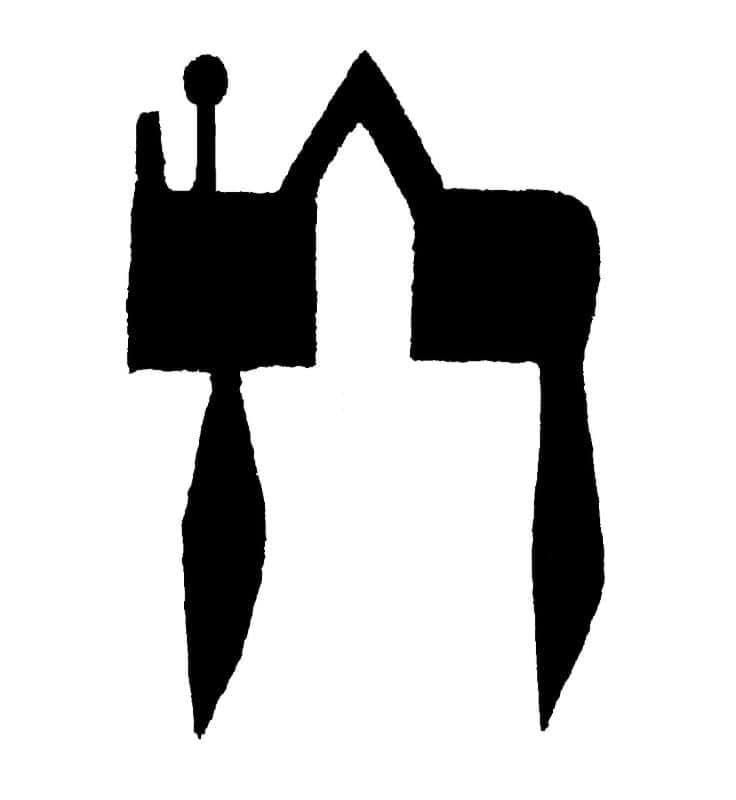
In the Biblical world, numbers are rarely only mathematics. They are the messengers of covenant and destiny. Hebrew thought hears music inside letters, which are the numbers as well.
The divine attributes of mercy are counted as thirteen. Mercy itself exceeds structure. Love overflows boundaries.
Seven, שבע (sheva), as we all know, is fullness. The world itself was completed in seven, seven branches of the Minorah, seven cycles of the biblical calendar.
Seven is completion, the finished circle, the resting breath of God over creation. In many ancient cultures, fullness itself was the highest ideal. To reach completion was enough.
But the Hebrew mind does not stop at completion.
The God of Israel is always looking toward the future. Therefore, after seven comes eight.
Eight, שמונה (shmoneh), is the step beyond the finished cycle. It is the beginning after the end. A child enters covenant on the eighth day. The oil of consecration runs down the hairs of the priests and Levites on the eighth day. After seven days of dedication, the priesthood begins its living ministry on the eighth.
The very שמיני עצרת (Shemini Atzeret), the mysterious “eighth assembly,” lingers with God after the fullness of the feast has ended, as though eternity itself refuses to let the beloved depart.
In Greek thought, perfection often rests in harmony and completion.
In Hebrew thought, completion becomes the womb of renewal.
Seven is fullness; eight is the future breaking into fullness.
Eight is resurrection hidden inside Bible stories. It is eternity entering time.
Did you ever think that the resurrection of the Messiah happened not only on the third day — counting in Hebrew terms after the death — but also on the eighth day of creation? Ashering by that fact creation into the eternity?
Perhaps this is why the Hebrew word שמונה (shemoneh) — eight — carries such quiet weight. It whispers that endings are never truly endings in the presence of God.
And then comes thirteen.
To many cultures, thirteen became a symbol of disruption or misfortune: in many buildings there is no thirteenth floor, no row thirteen, no ticket thirteen.
Yet Judaism hears something entirely different.
Thirteen is the number that steps beyond order into intimacy. Israel is called twelve tribes, yet hidden within the twelve stands Joseph, divided into Ephraim and Manasseh. Twelve deciples reflect the tribal story – Paul is called by God Himself an apostle to the gentiles, adding the the thirteen number.
Jewish tradition marks בר מצווה (Bar Mitzvah) at thirteen as the age of covenant responsibility, when a child becomes a “son of the commandment. Remember the Son of God at the age of twelve in the Temple — life is counted from conception.
It is not accidental that some of the most profound words in Hebrew — אהבה (Ahavah, “love”), אחד (Echad, “one”) carry the numerical value of thirteen, linking divine unity and love into one.
If twelve speaks of administration, tribes, and covenantal order, then thirteen — like the number eight — spills over beyond into eternity. Covenant survives because it is sustained by God Himself.
The divine attributes of Mercy are counted as thirteen. Mercy itself exceeds structure. Love overflows boundaries.
The movement from seven to eight, and from twelve to thirteen, reveals a profoundly Hebrew vision of existence: God is not merely the God of order, but the God who carries creation beyond itself. Beyond fullness lies renewal. Beyond structure lies covenant. Beyond ending lies beginning.
Thus eight and thirteen became, in Jewish consciousness, not numbers of excess, but numbers of transcendence into new order.

Member discussion: