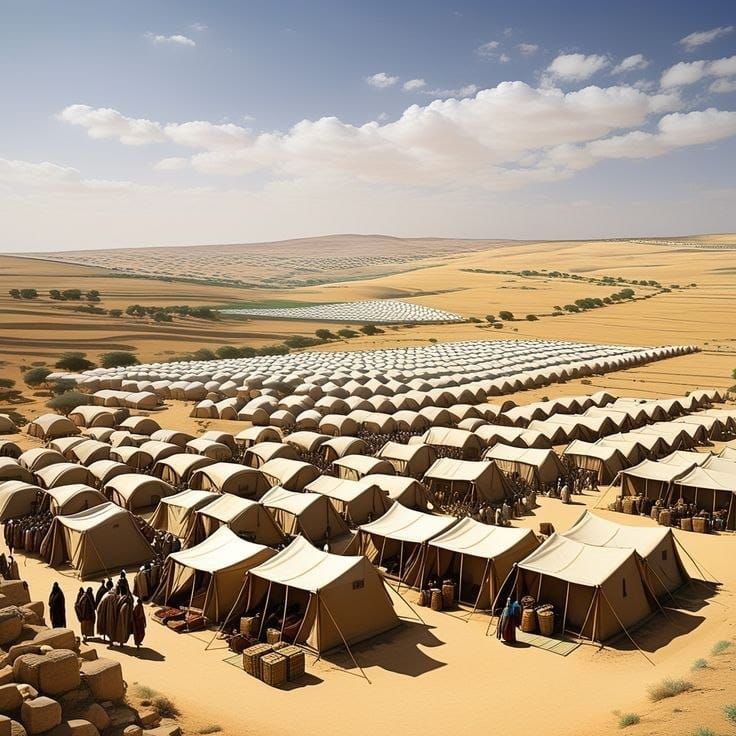
A very impressive host of tented Israel was camped on the eastern bank of the Jordan in Abel - Shittim for almost 5 months in the fortieth year of their journey from Egypt, waiting for just one sign from the Lord to step across into the Promised Land. That camping ground became an important classroom for His people.
The final instructions are of the utmost importance. But what would they be?
Once again, they come as an absolute surprise.
What topic opens Numbers 30?
The power of words.
More specifically, the keeping of vows and oaths. Why? Because the holiness, integrity, and future of the nation rest largely upon the sanctity of its promises and the honour of a person's word.
"He shall not break his word; he shall do according to all that proceeds out of his mouth." (Num. 30:2)
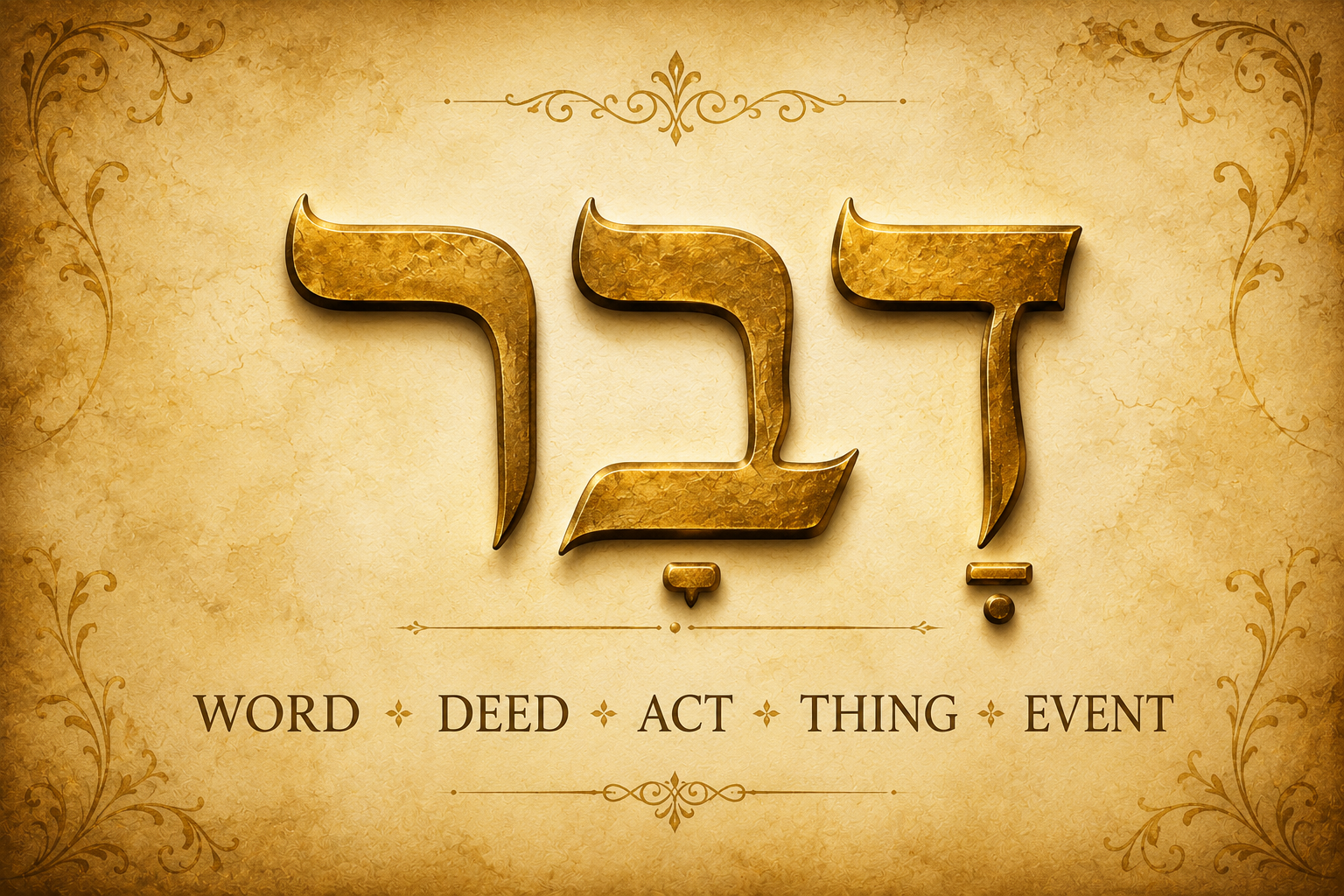
The Hebrew word דָּבָר (dāvār) means both "word, speech" and "deed" at the same time. To the Hebrew mind, a word carries within itself the power to become reality.
When God speaks, it materialises.
וַיֹּאמֶר אֱלֹהִים... וַיְהִי־כֵן
"And God said... and it was so."
Human beings were created בְּצֶלֶם אֱלֹהִים (be-tzelem Elohim)—in the image of God. Therefore, our word is to reflect His holy Word.
לֹא יַחֵל דְּבָרוֹ
"He shall not profane his word." (Num. 30:3)
Every promise He has ever spoken has become history—or is still awaiting its appointed time. His דָּבָר (dāvār) never returns empty because it always accomplishes His will.
So shall ours.
In Numbers 30 (the last instructions before entering the Land), we encounter two different kinds of vows.
A נֶדֶר (neder) changes the status of an object you are talking about: it becomes dedicated, forbidden, or receives a new status. An example can be seen in Gen. 28:20–22:
"Jacob vowed a vow (נֶדֶר, neder): This stone shall be God's house."
The stone became a sacred memorial of the event.
A second type—שְׁבוּעָה (shevu'ah)—does not change the object; it changes the person. Nothing happens to the object; the obligation now rests upon the speaker.
Exactly this is what Christ's words carry at the Last Supper. He did not forbid the fruit of the vine; rather, He bound Himself:
"I will not drink again of this fruit of the vine until that day when I drink it new with you in My Father's kingdom."
In the language of Numbers 30, this promise places the obligation upon Him. He pledged Himself to bring us safely through the history of this broken world until that great Messianic banquet, where He will drink the fruit of the vine for the first time in thousands of years together with us as a celebration of the power of His promise (shevu'ah).
While Israel wandered through the wilderness, the importance of this principle was not yet fully visible. But once the nation settled in the Promised Land, it would become paramount. The well-being of society would rest upon the sanctity of a person's word. A righteous person keeps his promise even when it turns against him.
As David beautifully writes:
"He who swears to his own hurt and does not change." (Psalm 15:4)
Integrity is measured not when keeping our word is convenient, but when it becomes costly.
Remember the story of the Gibeonites. They cleverly disguised themselves as travellers from a distant land. Their worn-out clothes, patched sandals, mouldy bread, and cracked wineskins convinced the leaders of Israel that they had come from far away. Without seeking counsel from the Lord, Joshua and the leaders made a covenant with them and swore an oath to let them live (Joshua 9).
Three days later, the deception was uncovered. Yet Israel did not attack the Gibeonites because they had given their word before God. An oath was more sacred than their disappointment.
Centuries later, King Saul violated that covenant. In his zeal for Israel and Judah, he attempted to destroy the Gibeonites, disregarding the oath his predecessors had sworn in the name of the Lord (2 Samuel 21:1–2).
The consequences did not end with Saul. During the reign of David, a famine struck the land for three consecutive years. When David sought the Lord, the answer came:
"It is because of Saul and his bloodstained house, because he put the Gibeonites to death." (2 Samuel 21:1)
Nearly three hundred years after Joshua's covenant, the nation was still accountable for a broken promise. David himself had to resolve the consequences of his predecessor's violent actions.
What a remarkable testimony to the holiness of a person's word. God never forgets a single word that slips from our lips.
It is not about personal ethics—it is about the covenantal foundation of an entire nation.
Now let us look at ourselves.
A promise, a word—a deed, an act before God—echoes through the generations. We are the recipients, reaping the harvest of our ancestors, and we are the creators of the future for our children and grandchildren.
Final words are worth paying attention to.
That is why the final instructions for His people before entering the Promised Land rest on the sanctity of their speech and the weight of their words.
"For by your words you will be justified, and by your words you will be condemned." (Matt. 12:37)
Now the final question to you: if the linguistics reflects a mentality and logic, does God receive your word as deed?

Member discussion: